His Devotion to the Sacred Heart, the Blessed Virgin, the Saints, the Angels, and the Souls in Purgatory.
The spirit of prayer was the life of the virtues with which Mr. Dupont’s soul was so richly endowed. He possessed that gift in an eminent degree, and he found delight in every form of devotion authorized by the Church. He was, in truth, a man of prayer and meditation. We may say of him that “he prayed always.” “How often we have contemplated with admiration,” writes the Superioress of a Community, “his humble attitude in prayer, so expressive of his realization of God’s presence, and the sense of his own abjection, his nothingness, before the Divine Majesty.” When alone, he sometimes expressed his sentiments by exterior acts not unusual in the lives of the Saints. The following practice was peculiar to himself; he communicated it to a person in his confidence. “I was making the Stations in the chapel of the Petit-Hôpital, and, being alone, I extended my arms in the form of a cross. On reaching the Station where Jesus is fastened to the cross, I considered that my hands were not open as should be those of a mendicant, with the palms turned towards Heaven in order to receive its gifts.
I quickly opened them, and presented them in a supplicating manner to our Lord. Thereupon, many thoughts presented themselves to my mind, too long to transcribe; nevertheless, it seemed to me a duty to mention the above practice, and many have derived benefit from thus extending the hands to God. In doing this many words are not necessary. The poor are less troublesome to the rich when they do not enumerate their wants. Now, if that be true in the case of a poor brother supplicating a rich brother, might not the same be said, of our petitions to our good God, Who knows so perfectly all our miseries?”
Above all others, he particularly relished liturgical prayers. He noticed the feasts the Church celebrates each day, and united with her in his intentions. On leaving the church at the conclusion of the Office, if he met a priest of his acquaintance, or a pious, well-informed layman, his salutation, his first remark, was to repeat a sentence from the Introit of the Mass, the Collect, the Post-communion, or an incident of the life of the Saint honored on that day.
Everything connected with the Passion of our Lord and His Divine Heart, excited his deepest emotion. He was a member of the Confraternity of the Sacred Heart, and he was particular in observing its rules and celebrating the special festivals. He speaks of this beautiful devotion, as a pledge of salvation and a motive of confidence: “It is evident that the graces which inundate the earth come from the adorable Heart of Jesus, and are obtained by Mary through the Sacred Heart. As it is a kind of extension of the mystery of the Incarnation, it belongs to Mary to interpose by her immaculate heart, since there is question of the last effort of love to restore a dead faith, as was announced by our Lord to Margaret Mary Alacoque. It is certain that St. John alone heard the pulsations of the Heart of Jesus, that Margaret Mary saw this Heart burning with the flames of love, and that Jesus wished us to offer particular homage to His Heart of flesh. When St. Gertrude, who died in 1260, predicted the future worship of the Sacred Heart, she noticed to St. John that he had not spoken of it in his Gospel. To which he replied: “This revelation is reserved for later times, that by hearing the pulsations of this Divine Heart, the world might be renewed in the love of God which would be growing cold.” The striking connection which exists between the revelations of St. Gertrude and those of Margaret Mary, explains what is now passing before us, and inspires an unbounded confidence as to the result of the present conflict. For three centuries, humanity wallowed in her reason, and at last found herself in the midst of a disgusting sewer. At this moment, she hears the words: Hora est jam nos de somno surgere.”
On the subject of the Sacred Heart, Mr. Dupont was inexhaustible. He wrote a beautiful and ingenious comparison, by which he explains the harmony which should exist between our hearts and the Heart of Jesus; it was suggested by the invention of a spring-pendulum. “Vivat Cor Jem sacratissimum!” he exclaims. “Since it has been granted to human genius to produce the wonderful combination of two clocks, which, when brought into connection, (one serving as a regulator), communicate the time to each other by harmonizing their movements,… might it not be granted to us, in the spiritual order, to place our hearts against the Heart of Jesus, and thus bring all our thoughts in harmony with its divine pulsations? The spring-pendulum clock was sold for its weight in gold (fifty thousand francs) to the Emperor Alexander. What sacrifices should not be made by a Christian to place himself in contact with the Heart of Jesus, which St. Gertrude saw issuing from His sacred side, as if placed outside, to be the regulator of our hearts?”
It would be useless to dwell, in this place upon Mr. Dupont’s filial devotion to the Blessed Virgin; we have seen him give proofs of it during the whole course of his life. We shall simply recall one or two particular instances, which should not be left unnoticed. Suspended above his chimney-piece was a card, upon which he had inscribed the names of the sanctuaries that he had visited in honor of the Mother of God. This long series, following in succession according to the order of his visits, was marked in different styles of writing, with different dates, and formed a peculiar kind of Litany, which it delighted the heart of the old pilgrim of Mary to recite. Opposite the door of his room, he placed in a small niche, where it still remains, a statue of the Blessed Virgin under the title of our Lady of Good Hope. He visited it frequently, and was careful to surround it in every season with verdure and flowers. It was a souvenir of his pilgrimage to La Salette.
Mr. Dupont held in high veneration our Lady of Miracles honored at the Refuge in Tours. It was with the oil that burned before this ancient statue that he first obtained the cure of the infirm, and he was desirous that this Madonna should be known by persons at a distance. He writes to a friend: “I cannot resist the impulse to send you a little picture which photography has reproduced with great perfection. It is a miraculous Madonna in oak which antedates the age of St. Louis; it is called our Lady of Miracles, and it is justly so styled. This statue is in the chapel of the Sisters of the Good Shepherd, and the religious conceived the happy thought of having it photographed, and medals struck off, which being distributed, will bear to distant places the name of the divine Mother.”
With the Sacred Heart of Jesus and the immaculate heart of Mary, he associated the heart of St. Joseph. He loved to recommend and circulate some Latin and French prayers in honor of this glorious patriarch. His confidence in St. Joseph was once recompensed in a charming manner. Mr. Dupont was accustomed on certain festivals, for example, at the Carnival and New Year’s day, to give a supper to the good old people of the Little Sisters of the Poor. One of these occasions, so eagerly anticipated by them, was approaching. The generous benefactor was forced to tell them that he had not the funds necessary to procure the extra provisions he always provided on those days. He advised them to apply to St. Joseph, and to make to the good Saint, the protector of the Little Sisters, a novena, in order to obtain turkeys and chickens for their accustomed feast. “Let us ask for a wild boar,” exclaimed several among them. A wild boar! The request appeared strange to Mr. Dupont, but as the old people seemed to give it a decided preference, he consented. Every day they said for this intention the prayers appointed for the novena. The man of God prayed with his habitual fervor and confidence; but he laughed and jested with his friends about the strange idea the good old men had of asking a wild boar of St. Joseph. The day before the conclusion of the novena, a porter from the railroad hastily entered his room, requesting him to direct the large gate at the entrance to be opened, because a wagon was there containing a wild boar for him; at the same time, he handed him a letter. One of his friends wrote: “I am a poor marksman, and I know not by what good fortune I killed a boar in my woods. As I am alone in the country, and cannot eat the boar myself, I send it to you, thinking it may be of some use for your poor.” We may readily imagine that it was heartily welcomed; the old men congratulated themselves upon the happy thought, and thanked a thousand times the holy Patriarch who had heard their prayer.
To devotion to St. Joseph, he united devotion to St. Teresa, who was, herself, so devoted to the foster father of our Lord. The great reformer of Carmel was, for many reasons, very dear to Mr. Dupont. He delighted in reading her works; he learned in her school the secrets of prayer; he inhaled the perfume of her most sublime virtues when visiting her daughters at the Monastery of Tours; he always carried about him the sheet called “the little letter of St. Teresa,” and kept a picture of the Saint, on the reverse of which, he had noted the different phases of what he called his conversion, but which we, more justly, may style his flight in he path of evangelical perfection and the supernatural life.
His devotion to St. Gertrude originated in his love for the Sacred Heart. He read and enjoyed the writings of the illustrious Benedictine, her “Revelations” and her “Insinuations of Divine Piety;” he was particularly attracted by the practices she taught. He especially loved to repeat the beautiful salutations she addresses to the wounds of our Lord, and he recommended them to pious souls. By his direction, a picture of the Saint was lithographed; in it she is represented as showing her heart, upon which Jesus appears seated as upon a throne, and beneath are the words: “You will find me in the heart of Gertrude.” The very name of Gertrude transported him with joy. On the return of her festival, he cannot restrain the ardent expressions of his love. To one who sympathized in his devotion he writes: “X must say a few words to you this evening before the termination of the day dedicated to St. Gertrude. But a letter does not afford us the means of entertaining ourselves, as we would wish, upon this great Saint, our special patroness. How many graces are attached to the loving devotion we can render to her, who was the living tabernacle of Jesus!” In his pious transports for reparation, he exclaimed: “Let us salute with love the prophetess of the Sacred Heart, the loving confidant of Jesus, who has told us all His secrets! O Gertrude, help us to pronounce with our hearts and lips the invocation which arose from your soul, all on fire at the recital of the blasphemies of the praetorium: ‘I salute Thee, my Jesus, vivifying pearl of the excellence of God; I salute Thee, incorruptible power of human nature!’ Our Lord deigned to make known to thee, that all who would thus salute Him with thee when they heard blasphemies, should be recompensed for their zeal in defending the glory of God. We implore thee, then, O amiable virgin, our dear patroness, to help us to abhor, as thou didst, the injuries offered to God and to combat them with thy cry of love “I salute thee, my Jesus, vivifying pearl!”
He also held in peculiar veneration his patron, St. Leo the Great. To a friend, an associate of the Nocturnal Adoration, who, on the occasion of his Saint’s day, promised to pray for him, he answers with charming modesty: “Either my good angel or my patron saint, must have inspired you to pray for me. The great Doctor of the Church is, in truth, the patron of your poor brother of the Adoration.
I have only one patron; but as God tempers the wind to the shorn lamb, I have occasion several times during the year to offer my homage to St. Leo, and I confide to him the care of my salvation.” On another year, the feast of the great Pope coincided with the joys of the resurrection of our Lord. To a friend, who kindly congratulated him, he replies: “How kind you were to remind me so seasonably that the festival of my holy patron corresponded this year with the alleluia of the Resurrection. But, in order to complete your act of courtesy, it remains for you to obtain also for me the grace of resuscitating, by disengaging myself entirely from the old man, and I rely upon your prayers ad hoc.”
With St. Leo, the terror of the barbarians and the protector of Rome, he associated St. Michael, the defender of the Church. He designed a picture of this archangel crushing the dragon, which was to be represented chained. “It seems to me,” he said, “that one head to the dragon is better than many, and expresses more clearly the powerful action of the chain, which the angel is about to place around his neck. The chain could not bind the seven heads; there would seem an uncertainty as to the result of the effort. Let Hercules destroy successively the heads of the hydra. St. Michael said but one word: Quis ut Deus? Who is like to God?”
The devotion he professed for St. Anthony of Padua had for its object the recovery of lost or mislaid articles. He applied for even trivial things to this Saint whose name is so popular, and his confidence was always rewarded. We mention one instance out of a thousand. It occurred in 1847. The servant of God was going from Tours to Mans, and met in the public conveyance a religious of Providence, Sister Francis Xavier, of whom we have already spoken. She was on her way to Havre, whence she was to embark for America. Being the only passengers, our travelers took advantage of the circumstance to pray, and entertain themselves about God during the journey. On their arrival at Mans, Mr. Dupont accompanied the religious to the house of her Community; the Superioress immediately inquired of the Sister if she had a trunk; she replied in the affirmative. “Where is it?” That was a difficult question to answer. The pious layman inquired at the office of the diligence; it was not there. He returned to say to the Sister, who was to leave early the following day for Havre, not to be disturbed, as St. Anthony of Padua would cause the trunk to be restored; he was going, he said, to pray to the Saint, and she must pray also. The large gate of the establishment was then closed, and the Sisters retired for the night. The next morning at five o’clock, when the portress went to unlock the gate, what was her astonishment to find a trunk within the enclosure on the pavement near the gate, which, nevertheless, was still locked! No one had rung the bell, no one had opened the gate, no one had entered; the trunk was not there when they went to bed; it was, however, the very trunk which they thought was lost. When informed of the circumstance, Mr. Dupont seemed to find it quite natural: “St. Anthony had taken care of the baggage whilst they were occupied with our Lord.”
In invoking St. Anthony of Padua, the fervent Christian had a special motive not generally known, that of recovering lost graces. In the year 1846, he agreed with several persons, among others Madame des Hayes, a religious of the Sacred Heart, to make a novena for that intention. He strongly urged this practice upon pious souls in order to obtain the conversion of sinners. He wrote to one of them: “I advise you to have the novena to St. Anthony of Padua reprinted;” and added: “Those who make this novena, after having prayed for themselves, will, no doubt, be impelled to supplicate our good God in favor of some sinner.” He adds: “We cannot know how much a true sentiment of faith can accomplish in the search for lost graces.” He himself had this novena printed, and he distributed it. He wrote to one of his goddaughters, for whom he dreaded a dangerous intimacy: “I write to make you a suggestion, which is to commence a novena in honor of St. Anthony of Padua, that you may find a good, pious soul with whom you may contract a holy friendship.” On all occasions, he manifested an unlimited confidence in this illustrious son of St. Francis, asserting that he had never invoked him, in vain, even for the most trivial objects. He, therefore, wrote to a lady who was lamenting the lass of her spectacles: “Pray to St. Anthony of Padua, and you will find your spectacles.” For more important things, he advised to pledge oneself, by promise or vow, to make some return.
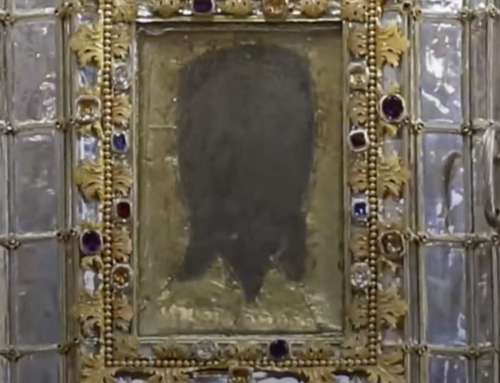
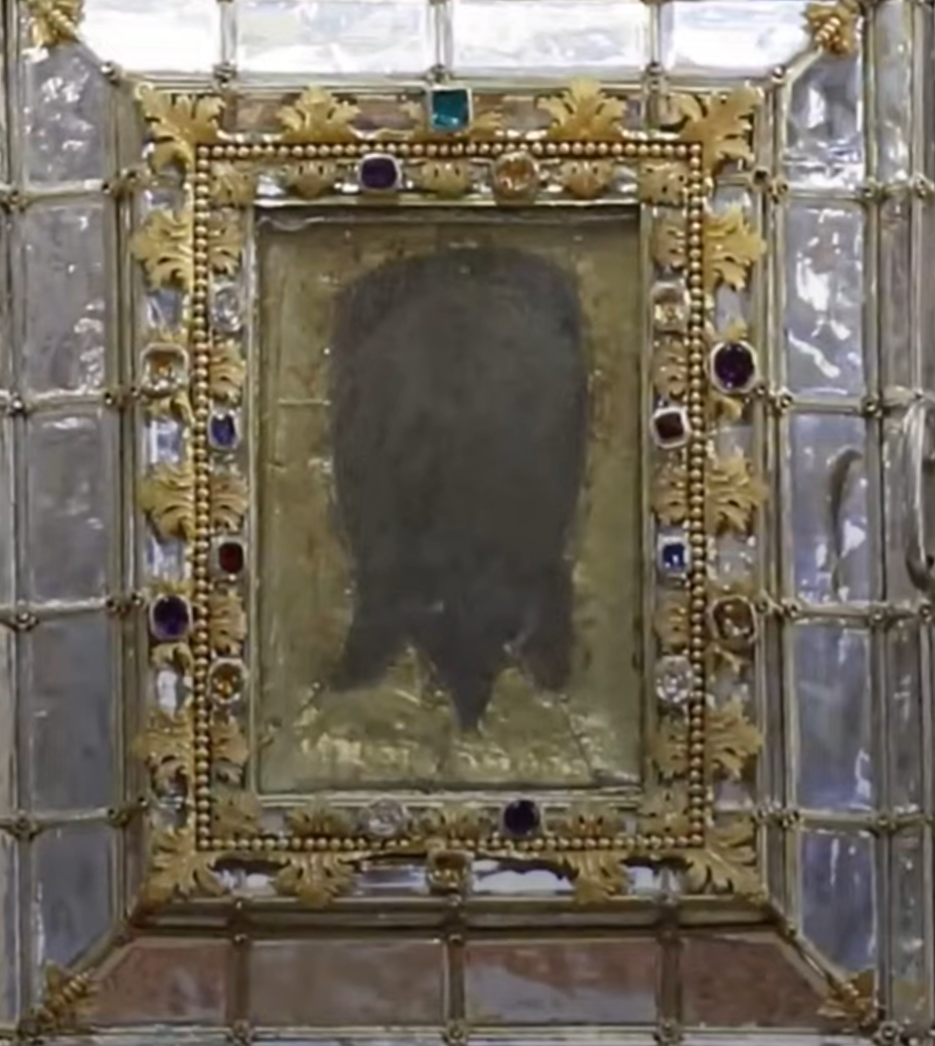
He particularly honored St. Francis of Assisi, being attracted to the love of the seraphic patriarch by his stigmata, which recalled the pierced Heart and the dolorous wounds of the Divine Crucified, and also by the prayer taken from the Scriptures, in which mention is twice made of the Holy Face, and which is called the “Benediction of St. Francis.” He recited this prayer very frequently, and he had it printed on a small sheet by itself, which he distributed and which he carried about him, venerating it with great devotion, pressing it to his lips, and pronouncing with intense delight and an angelic enthusiasm, each of the three parts composing it. He never wearied of commenting upon these three parts, particularly the second, which refers to the Son, and in which is contained the whole economy of the devotion to the Holy Face: “Ostendat Faciem suam tibi et misereatur tui: Let him show his Face to thee and have pity on thee.” He made use of it in his attacks of gout or paralysis as a remedy, and as a motive of patience. “This benediction,” he says, “can be effectually used in every combat against the old enemy, who afflicts to-day as in the time of Job with paralysis, as well as leprosy and other miseries, which make us sigh after our heavenly country when we are attacked by them.” The precious indulgence of the Portiuncula was one of those which he was most eager to obtain. He never failed to go to Notre-Dame-la-Riche, (the only church in which it could, at that time, be gained), to make the visit prescribed for that intention. His zeal and persevering fidelity — may be gathered from a remark in a letter written in 1860: “For the last twenty-five years, I have annually followed the devotion of the Portiuncula; my poor mother never failed to attend.”
We must not omit to mention among his devotions, the homage he paid to St. Monica. “The world is filled,” he would say, “with afflicted mothers and wives; I recommend you to say the Litany of St Monica.” For a long time, he zealously disseminated those pious invocations, which are addressed, and not without fruit, to the mother of the great St. Augustine. When the association of Christian Mothers, which is under the protection of this Saint, was instituted and at once introduced into Tours, he approbated it with his whole soul; he rejoiced that France, to her honor, had taken the initiative in so admirable a work, and he anticipated from it great advantages to families. “The foundation of the confraternity of Christian Mothers,” he writes to a friend in 1856, “will make a new breach in the citadel of Satan. I have been, for some time, in communication with one of the first mothers of the work.”
The patrons of the city were not neglected in his devotions. Conjointly with St. Martin, he honored St. Gatian, the first apostle of Tours. He loved the ancient and beautiful Cathedral which is dedicated to him; be admired the two magnificent towers which ornament it, and he loved to contemplate them, when, tormented by gout, he remained seated in his garden on a bench whence they could be seen. As he gazed upon them his heart was elevated to God, and his mind reverted to the generation which had erected them to the glory of our father in the faith. He had the church photographed and he sent to all his friends copies of it, with an inscription in the form of a prayer which he had composed. Near Notre-Dame-la-Riche in the primitive cemetery of the Christians, is shown the place where the first bishop of the diocese was buried; Mr. Dupont frequently visited it. When a petition was sent to obtain the benediction of Pius IX on the work of St. Martin, he wished the letter to be dated on the feast of St. Gatian.
His devotion to St. Francis of Paula, the other great protector of the city of Tours, was not less striking. It originated in the prolonged residence of the Canon Pasquier, his confessor and friend, in the ancient monastery of Plessis-lez-Tours. He went frequently at that time to pray at the tomb of the founder of the Minims, in company with the pious Canon and two or three other priests who entertained similar sentiments, and they secretly venerated the blessed, but deserted spot, for which they hoped a brighter future. Whilst he was able to walk, he never omitted to go there on the 2d of April, the festival day of the Saint. For a long time this tomb, formerly so celebrated and so frequented, had been designated only by a wooden cross. Mr. Dupont was among the first who cherished the desire of restoring the ancient church, and reestablishing the pilgrimages of former days. In the mean time, he solicited the favor of elevating at his own expense a more suitable cross. It was made of iron ornamented and arranged according to his directions. The memorable spot received no other mark of honor, until the first stone was laid of the monument which it is now proposed to construct. The pious layman made his offering so discreetly that few knew from whom it came.
His intelligent piety professed an especial devotion to the patriarchs and saints of the old law, whom he had learned to know and love from his assiduous study of the Scriptures: Job, Moses, David, Elias, Eliseus, Daniel, Tobias. He invoked them on certain days and under certain circumstances, recalling their words, their actions and virtues. He did not neglect Saints Anne and Joachim, who were so intimately connected with Mary and the Word Incarnate. “How profitable it is to place oneself under the protection of the august ancestors of our Lord! Grandparents are so proud of the success of their children!!! And thus we may believe that they have benedictions in reserve for “all men who felicitate them upon Mary and Jesus.”
Besides the honor he paid the great Saints glorified in Scripture and in the Church, the servant of God rendered homage to the holy angels. His confidence in his guardian angel had been greatly increased by an incident that occurred to himself, one apparently trifling, but which made a strong impression upon his mind. We give it as it was related to us by one of his friends: “I was walking one day in company with Mr. Dupont through the street of the Ursulines, and, when we arrived opposite the street which runs from the cloister along the garden of the archiepiscopal palace, I noticed that he respectfully raised his hat as though he were saluting some one. Seeing no one near us, I inquired for whom the salutation was intended. He answered that it was a mark of respect to his good angel; and, on being questioned by me, he related the following incident: Once when passing through that street, he was turning over the leaves of a small book on devotion to the guardian angels. He had just read the passage: “Beware of disregarding an inspiration to do good, because you thus dishonor your good angel,” when he noticed a stranger, a countryman with a cheerful countenance, in good attire, and apparently in easy circumstances, walking down the street, carrying a cane in his hand. Upon perceiving him, the idea immediately came to his mind to offer an alms to the worthy man; seeing the stranger so well clothed, his first impulse was to reject the thought, but, being interiorly urged to act upon the inspiration, and making the application of what he had just read, he drew from his purse a small piece of money and approached the unknown man: ‘But,’ he said, ‘I was so unprepared for a polite acknowledgment of my strange offer that, fearing to feel the weight of his cane, I was ready on the instant to make my escape. Imagine my astonishment when the stranger stopping in surprise, informed me that he lived at the other extremity of the department, that he had lost his purse, and being unacquainted with any one at Tours, he was quite embarrassed how to obtain the means to satisfy his hunger and to return to his home.’ ‘But,’ he asked, ‘how could you possibly know of my difficulty?’ The servant of God pointed out to him the passage in the little book he held in his hand, replaced the small piece of money by a coin of greater value, and, as the good man refused to accept it, unless as a loan, he requested him to settle the debt by giving an equal amount to the poor. ‘From that time,’ said Mr. Dupont, ‘I never fail to salute my good angel when I pass this spot.’”
So great was his confidence in the protection of the holy angels, that even a remark from him in reference to them, sometimes made an irresistible and indelible impression, as in the following incident related to us by a lady: “I was quite a young woman; I desired to join my husband, an officer in Africa, and it would be necessary for me to undertake the journey alone. I met Mr. Dupont in the street, and I stopped to speak to him of my project. I expressed to him the terror I experienced at the mere thought of going alone, and I asked his opinion as to its propriety. With a tone of confidence and an air of dignity, which I shall never forget, he said; ‘But, Madam, you will not be alone. You forget your guardian angel. Go, go without fear…’ I went, inspired with confidence by his words, and I arrived in safety at my destination. The incident may appear trifling, but there was left upon my mind so deep an impression of the presence of my guardian angel that it has never been effaced.”
A pious lady living in the world relates a circumstance that occurred in her youth, which proves how entirely this fervent Christian relied on the intervention of the good angels: “One Christmas eve, my father, who feared I would enter religion, and who, on that account, never entrusted me to the care of any one else, permitting me to go to confession only twice a year, and then to the confessor of his choice, had accompanied me to the Cathedral, where I was to make my confession to M. l’Abbé Manceau. After being there a short time he felt the cold, and said to me he was going for his cloak, but he would return immediately. Scarcely had he left, when an irresistible desire impelled me to go to the Carmelite Convent which was at that time only a short distance from the Church; I followed the impulse, notwithstanding my fear of being discovered by my father, and the consequent outbreak of his anger. I was not long absent, and yet, on returning to the church, I saw my father standing before the confessional of Mr. Manceau, evidently looking around for me. What could I do? I must necessarily pass before him to resume my place; he would, undoubtedly, see me and suspect where I had been; I knew how violent would be the explosion of his wrath. I dared not advance; I stood undecided, when perceiving Mr. Dupont, I approached him and, in a few words, explained my embarrassment: ‘Do not fear,’ he said to me gently, ‘ask his angel to close his eyes, and he will not see you.’ Trembling like a leaf, I went to my father and said to him: ‘Have a little patience, my turn will soon come, and I shall not be long. The holy man had spoken the truth; his good angel, in concert with my father’s angel, had closed his eyes; he did not see the direction from which I approached him.”
Mr. Dupont’s letters to his friends and various persons, often commenced with an act of homage rendered to the presence of the good angels: “I salute your good angel!” or: “Salutations to our good angels!” It was a pious practice for which he would, at times, give his reasons. “I commence my letter in this manner, because it expresses a very natural thought. When we meet a friend, do we remove our hats in salutation to him alone, if he is in company with one or several persons? More than that, if the companion of our friend should be a person of high rank, he would receive the first salutation, and we should enter into conversation with our friend, only with the permission of the noble personage.” To another he writes: “I salute your dear angel” my dear friend, and I beg him to unite with mine, in obtaining for both of us the grace to accomplish God’s holy will in all things,”
In the intimate communications between souls, he perceived the intervention of good angels. He begged them to make known his gratitude to persons who had obliged him. “I desire with my whole heart,” he says, “that my good angel, in return for all the services you so kindly render me, would bestow upon you graces for the good of your soul. To ask, is to obtain. Therefore, you will have them. And you will say: ‘The angel of the poor pilgrim has manifested gratitude to me.’”
Another of his practices was to pray the good angels to conduct him to the holy table. In the latter part of his life, when he could communicate but rarely, he had composed under the title of: Sighs of a soul deprived of daily communion, this prayer: “Good angel, dear object of my affections, do not refuse me the aid of thy powerful intercession; help me to transport myself in spirit to every altar throughout the world, at the moment when the Holy Sacrifice is consummated, that I may collect upon my tongue the particles of the hosts which fall at the moment of holy communion.”
The Scriptures suggested to him pious considerations upon the holy angels. “How many graces descend upon us from Heaven at the same time! We may well, therefore, apply to ourselves the words of the prophet Eliseus to his servant, at the moment when the latter tremblingly announced to him that the city was surrounded by enemies: ‘Fear not, for there are more with us than with them.’ And at the same moment, Eliseus begs God to open the eyes of Giezi, and Giezi sees millions of horses and chariots of fire, and the enemy abandon the siege. I think we should continually fortify ourselves by the thought that the good angels are able to do us more good than the bad angels can inflict evils upon us.”
In regard to the “petitions for prayers,” which he did not always inscribe upon the register with the detail of particulars which persons desired, he makes this remark: “I am convinced that the good angels comprehend wonderfully well my abbreviations necessitated by want of time.” He did not wish those angels who were commissioned to receive a soul at its departure from life, to be retarded by prayer. “Do not make useless efforts,” he says, “to detain Sister X—– from her Heavenly Country. When the angels come for such souls, we are very weak to reject them. We say in our poor way, like the inhabitants of Joppa around the body of Dorcas: ‘Behold her good works; we have need of her.’ But the Saints in Heaven are more powerful. In regard to the service they render us, all the Saints, on leaving the earth, may say with our Lord: ‘It is expedient for you that I go.’”
Another devotion dear to Mr. Dupont was that which he practiced for the souls in purgatory. He manifested it especially by the communions he offered for them. He had particular ideas on this subject which he often expressed with an extraordinary enthusiasm. He thus explains himself: “When I have the honor of communicating for a departed soul, at the moment of receiving the holy host, I employ a little formula which I adopted many years ago; it is to say: Portio mea in terra viventium: ‘Thou art my portion in the land of the living.’
“I adopted it under the following circumstances. On the death of Monseigneur de Montblanc, Archbishop of Tours, during the Mass which I intended offering for the repose of his soul, I lost sight of him completely, and I did not even think of him at holy communion, when the priest, in giving me communion, pressed somewhat heavily with his finger, and broke upon my tongue the sacred host in two distinct parts. I feared that one of the particles had fallen; but at the same moment, I felt it in my month, and I exclaimed interiorly: Portio mea in terra viventium! Immediately, the thought of Monseigneur Montblanc came to my mind, and I said: ‘Monseigneur, you say that with more reason than I, who am still in the land of the dying! ’ From that time, I have always had recourse to my little formula when I approach holy communion.”
He made use of this practice on an occasion which is worth relating. A lady of Tours, with whom he was intimately acquainted, died. The following day as he was leaving the church, he met her daughter, and said to her confidentially and in an ecstatic manner: “I offered my communion for your mother, but you do not know my embarrassment. At the moment the priest placed the sacred host upon my tongue, it separated into two parts. Several ideas presented themselves to my mind, and, whilst I was thinking of offering to God for the dear deceased the part I intended for her, it seemed to me that she appeared before me with her hands full of gold, as if to say to me: ‘am richer than you?’ As I strove to examine this impression, I seemed to hear her pronounce these words: ‘My portion is in the land of the living.’ Oh! how pleased I was! yes, the dead who die in the Lord go to the land of the living, and it is we, alas! who are in the land of the dying, in that land where, at every moment we are exposed to the danger of losing God, and of dying eternally.”
The thought of death was ever present to his mind; the consideration of a future life and a blessed eternity, was a powerful aid to infuse a supernatural motive into his actions. All or them were directed to God. A person, who frequented his house, and sometimes attended to business affairs during his absence, told us that wishing one day to seal a letter, he found only black wafers upon the desk. Mr. Dupont said: “It is the emblem of mourning, and I wear mourning as all sinners should do.” This incident recalls another related by one of his friends. “Mr. Dupont always wore black. ‘One day,’ he said, ‘some one asked me for whom I was in mourning. The one who put the question was not a Christian: he asked me for whom I wore mourning! ‘For you,’ I replied; for it is written: ‘Seven days you shall wear mourning for the dead, but for the fool and impious all the days of your life.’ Mr. Dupont had in his tranquil manner, applied these words to the one who questioned him, and who, in his eyes, was a fool and an impious man. This excessive frankness appeared to him as quite a simple and natural method, and he would relate such instances without ascribing to himself either merit or reproach.” His black dress did not, therefore, indicate, as the world might suppose, the loss of a friend. Death, as he viewed it, was life, and instead of weeping over the departure of those he loved, he rejoiced at their eternal happiness whilst awaiting the reunion with them in Heaven.
He had a special practice in favor of the friends of whose death he was informed, and he suggested it to others that they might apply it to him at his death. He explains it to one of his goddaughters in the following terms: “Everything leads me to believe that I shall be called to a severe judgment. Alas! I understand that it is an all-important affair, and that, in such a moment, we invoke, like Job, the aid of our friends. I will tell you one of my devotions taken from St. Teresa, and I beg you to adopt it, in order to make use of it when the occasion may require. St. Teresa, on hearing of the death of an old friend, exclaimed: ‘If during my life, O Lord, I have done any good, apply it to that soul.’ At the same moment, she understood that the soul was admitted into Heaven.”
Whenever he met a funeral procession, he would immediately join it,— it mattered not to what class of society the deceased belonged,— and saying the rosary, follow bare-headed as far as the cemetery. He preferred to attend the funerals of those in the humbler walks of life, and of the poor: he made it a duty to pray for the repose of their souls, an office of charity which is too often neglected.