Meditation XV
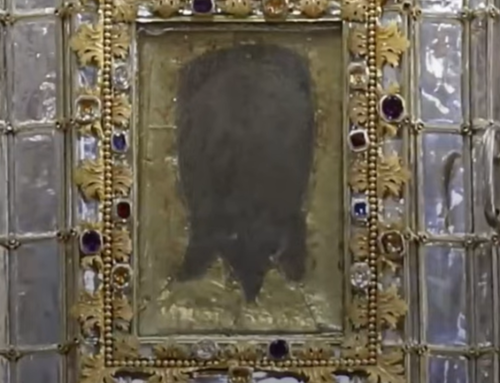
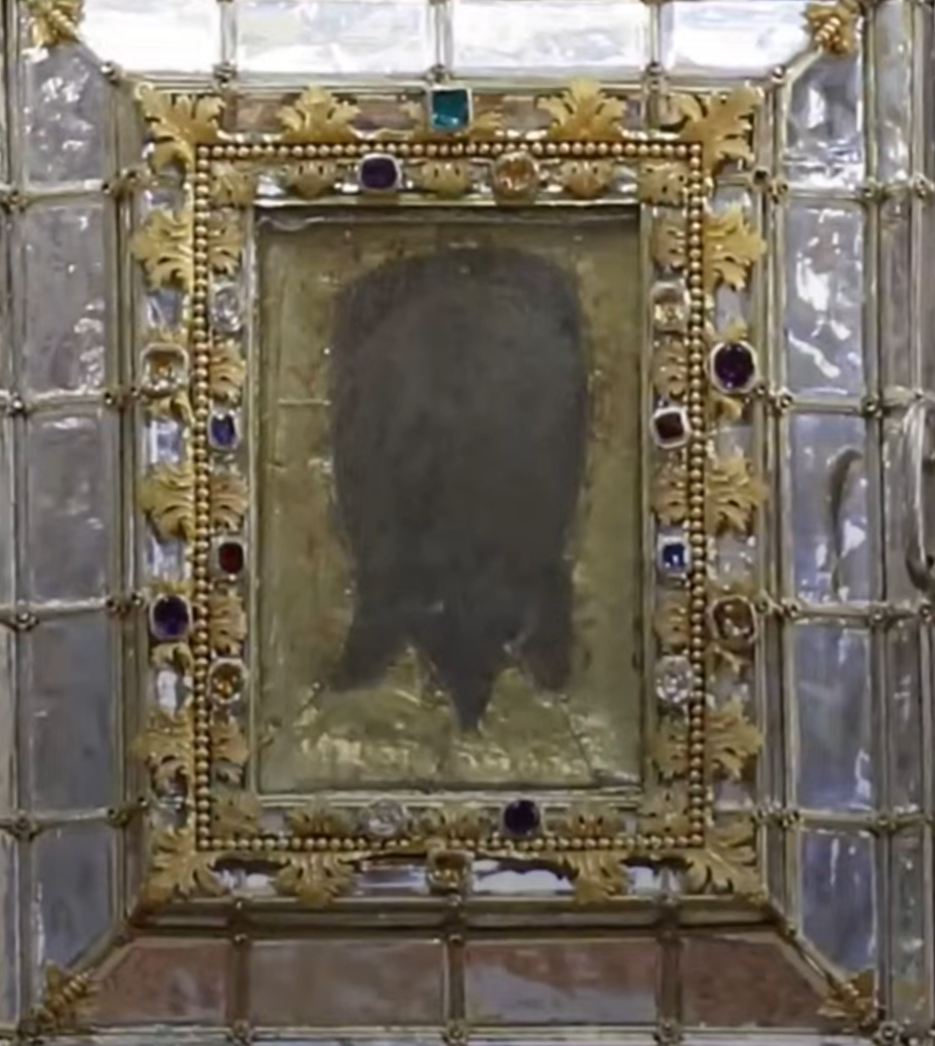
THE HOLY FACE WEEPS OVER JERUSALEM.
Oh adorable Face, grieving at the sight of Jerusalem and shedding tears over that ungraceful city, have pity on us.
On the day when Jesus drew nigh to Jerusalem, as soon as he perceived the city, he began to weep over it at the thought of the woes which were destined to overwhelm it, because it knew not the time of God’s visitation. Contemplate, oh my soul, the tears which inundate the Face of the most beautiful among men. Reverence the expression of the sorrowful Face of Jesus, and beg of him to reveal to thee the cause of it.
1st POINT. — JESUS WEEPS OVER HIS COUNTRY.
Jesus weeps over Jerusalem; Jerusalem, which he has overwhelmed with heavenly benedictions; Jerusalem, which he has honored with his presence! He beholds passing before him, as in a picture, on one side, the triumphant entrance of the Hebrews into the promised land, the solemnities and the inspired songs of David and of Salomon, the magnificence of the temple, the crowds of people which in days of rejoicing flocked into its porticoes, and the glory with which God had surrounded it; on the other side, the hardening of heart and the prevarications of Israel; the dissensions of the sects which agitate and trouble it, the hatred of the scribes and Pharisees. His divine eyes, discovering a future which is not far distant, perceive near the city a mountain, a cross and traces of blood, and then the justice of his Father soon descending heavily upon the deicidal city, delivering it up to the horrors of a siege in which its inhabitants, decimated by pestilence and famine, will everywhere present to the eyes a picture of hell. He beholds the temple burnt and destroyed, the walls of Sion thrown down, Jerusalem abandoned and solitary because it did not know the time of God’s visitation. And at the sight, the Savior sheds tears over his country, because he loves it and deplores its misfortunes.
Oh Jesus, teach us also to shed tears over two countries which we ought to love with our whole hearts: the Church and our own land. The Church is our mother, she may indeed suffer persecution and be tossed upon the waves; but she will no perish, because she has the promise of eternal life; but can we be insensible to her misfortunes and to those to which our own dear country is prey: insensible to the loss of s many poor souls who are voluntarily lost through wandering away from the divine fold? Oh Jesus, permit us to share in the sorrowful feeling of thy heart, and may we weep with thee over these two Jerusalems.
2nd point. — JESUS WEEPS OVER OUR SOULS.
There is another Jerusalem over which the Holy Face also shed tears; it is our own soul. “Weep for yourselves,” Jesus said to the daughters of Israel, “before bewailing my sufferings(1).” If I cast a glance, oh my God, on the Face of my poor soul, how many causes for tears do I not see? Thou didst bestow on it innumerable blessings and didst ornament it with graces! Thou didst make of it a promised land, a paradise of delights. Thou didst raise therein a temple to thyself, thou didst reign as master of it. But behold factions of opposing parties and passions rose suddenly within it. They brought with them desolation and ruin. The walls have been thrown down, the citadel has been taken, and the enemy has usurped thy place.
Viae Sion lugent. The pathways of Sion are desolate and deserted, because there is no longer any one to assist at its solemnities. Behold the picture of my soul in a state of sin. It is over it I ought to weep, but that my tears may be fruitful, I must weep with Jesus. To contrition I must add a sincere desire to see the walls of the city rise again. I must call upon Jesus and beg of him to re-establish his reign therein. Come then, oh Lord, come and take anew possession of my soul. Make thy triumphal entrance into it, and may the beauty of the restored temple rejoice thy Holy Face and thy sacred Heart.
SPIRITUAL BOUQUET.
Videns civitatem, flevit super eam.
And when he drew near, seeing the city, he wept over it. (Luke, xix, 41.)
M. DUPONT. — HIS YOUTH.
Leon Papin Dupont was born at Martinique on the 24th of January 1797, of an ancient family of Breton origin. He went through his studies at Pontlevoy (diocese of Blois). From his earliest youth he displayed an energy of will and a firmness of character which were presages of the most heroic virtues. On leaving Pontlevoy, he went to Paris to study law.
Without departing from his Christian habits, Leon Dupont, being in the enjoyment of a large fortune, having leisure at his command, and distinguished friends, led a very luxurious life. Now it happened that on one occasion his handsome carriage got entangled in the midst of a number of little chimney sweeps. He found that these poor little children were specially looked after and cared for by some young laymen of his own rank. This charitable work interests him, and he immediately asks to be allowed to share in it. It was the call of grace which led him to the life of good works which he was destined to follow all his life long. He wrote thus on this subject to one of his friends— “All at once light shone brightly into my eyes. This ray of light made me see the importance of a Christian life, the indispensable business of salvation. But it was necessary that grace should be added to it.” It was added, in fact: and from that time M. Dupont gave himself seriously to God.
Having been admitted into the celebrated congregation of the Blessed Virgin, founded at Paris by Fr Delpuits he made it his bounden duty to observe all its rules without human respect and with the energy and frankness which distinguished his character. The following example will give a good idea of his conduct.
One Sunday, as he was travelling, he halted at Nantes. Finding there a young priest belonging to the parish, he begged him to allow him to go to confession. and expressed a wish to receive holy communion. The vicar, seeing that he had to do with a handsome young man belonging evidently to the fashionable world, dared not believe him to be in earnest, and hesitated to receive him into his confessional, so rare was it at that time to see such men brave human respect and publicly communicate on an ordinary Sunday. M. Dupont, guessing of what he was thinking, and seeing how embarrassed he was, told him that he belonged to the congregation of Mary, and that he was accustomed to receive the sacraments every week. Some time afterwards, when he had returned to Martinique to his mother, he had an idea, it is said, of becoming a priest; but his vocation met with legitimate obstacles. Named counsellor and auditor of the royal court, he was very soon afterwards made titulary counsellor. At thirty years of age, he married a young and pious Creole, Mlle. d’Audiffredi, whose virtues and qualities promised him long days of a peaceful and happy life. She was suddenly taken from him by death in the course of a few years, leaving him an only daughter, whom she made him promise, on her death bed, to confide to the care of the Venerable Mother de Lignac, Superioress of the Ursulines of Tours, that she might be educated by the same religious by whom she herself had been brought up.
INVOCATION.
Oh Lord our God, who through the adorable effects of thy providence callest, by unfathomable and hidden ways, to thy service the servants whom thou hast chosen to perform thy works, grant us clearly to know the call of thy grace, to correspond to it with fidelity and to labor with all the energy of our will in the work of reparation for the glory of thy holy Name, the good of our neighbor and the sanctification of our souls.
(1) Nolite fiere super me, sed super vos ipsas flete et super filios vestros. (Luc. XXIII, 28.)