Meditation XI
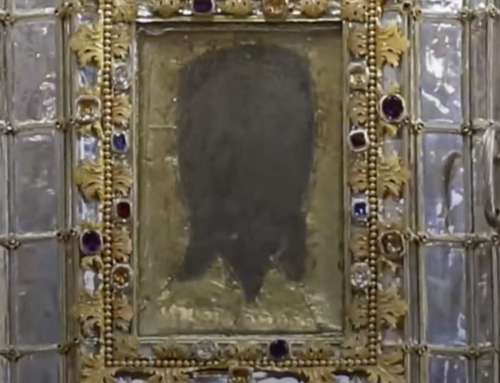
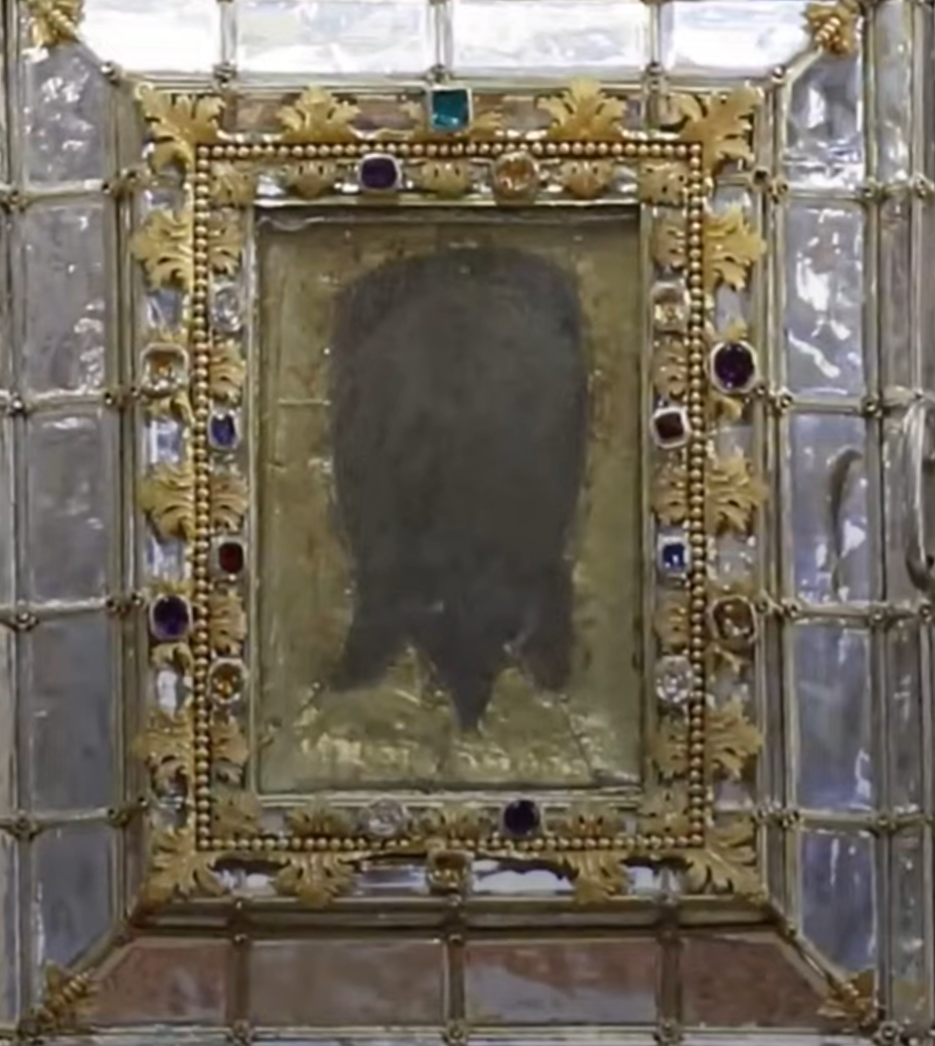
THE HOLY FACE AND MAGDALEN
Oh adorable Face, whose modesty and sweetness attracted the just and sinners, have pity on us.
There was a woman of great renown in the city, and this woman was a sinner(1). The power of one look of Jesus, the generosity of the love of Magdalen, these are the two mysteries which render this passage of the Gospel so consoling to the Christian soul. “There was a woman, and she was a sinner.” Who can call himself just, oh my God, before thee? Thy divine eyes, illuminating the splendors of heaven, discover spots even in the angels, those spirits who are so pure.
How shall I dare to appear before thee? The consideration of thy mercy towards Mary Magdalen shall be my hope and my consolation.
1st POINT. — THE LOOK WHICH JESUS CAST ON MAGDALEN.
On a certain evening, according to a pious tradition, Mary Magdalen was seated at the door of her dwelling, inhaling the balmy air of spring, when a group of travelers passed in front of her. One of them, who seemed to be a prophet, was explaining the law, and when he came near where Magdalen was, she heard these words— “I say to you that even so there shall he joy in heaven upon one sinner that doeth penance(2).” And at the same time, raising his head, he cast his eyes upon Magdalen, and the glance of the divine Face met the glance of the sinner.
Some days afterwards, Jesus was invited to a feast in the house of a pharisee, when a woman appeared, bearing a vase of alabaster filled with a delicious perfume. Shedding it over the feet of the Savior, she watered them with her tears, and then reverently wiped them with her hair. “Many sins are forgiven her,” the Savior immediately said, “because she hath loved much(3).” Such is the recompense of the sinner. The first glance cast upon her by the divine Face was a flash of grace; the second made Magdalen fall down at the feet of Jesus, to rise again, purified, cured and renewed.
Oh incomparable Face of Jesus, look also on my poor soul, and convert me like Magdalen.
2nd POINT. — FAITHFULNESS OF MAGDALEN.
After meeting with Jesus, Mary Magdalen went back to her paternal home, which she had long since forgotten. Several months passed in the midst of the joys attendant upon her return, of the pleasures of duties fulfilled and of fraternal union. Now it came to pass that on a certain day the divine Master appeared at the threshold of the dwelling of Lazarus and his sisters. Fatigued with his apostolical labors, he came to Bethany to ask for repose amidst his friends. Magdalen was the first to understand the happiness of possessing the Savior. On her knees at his feet, she listens, contemplates, adores, and soon deserves to hear these consoling words fall from the lips of the Messiah— “Mary has chosen the better part, and it shall not be taken away from her(4).”
She receives them, places them in her heart and thenceforth attaches herself to Jesus never again to be separated from him. Everywhere she seeks for a glance from his divine Face, and on the day of trial, it is towards him she precipitates herself exclaiming— “Lord, if thou hadst been here, my brother had not died(5).” On Calvary the sinner stands beside the Virgin of Dolors; she embalms the body of her Master, she attaches herself to his sepulcher, and is one of the first to deserve the singular grace of receiving the first look of the risen Holy Face.
Behold thy model, oh my soul. A sinner like Magdalen, a glance from the Face of Jesus falls upon thee, to touch and convert thee. Always seek this divine glance, and if it is not permitted thee long to enjoy the delights of contemplation, go and announce to the world, like Magdalen, the happiness of having found Jesus again and the marvels of his love.
SPIRITUAL BOUQUET
Faciem tuam, Domine, requiram. (Ps. xxxi.).
I will seek thy Face, O Lord.
THE GOLDEN ARROW.
Sister Marie de Saint-Pierre had now been four years at the Carmel of Tours. She had given herself up generously and without reserve to the action of grace. At last the moment had come in which the object of her mission was to be more clearly shown to her. The heavenly Spouse is about to reveal what it is that most displeases his heart. It is blasphemy. He will show her his justice ready to strike, if prompt reparation be not offered to him. He will suggest to her the means to be employed to console his heart and appease his righteous anger.
On the 26th August 1843 the Sister writes— “Then he opened my heart, gathered therein all the powers of my soul and addressed to me these words— My name is everywhere blasphemed; even children blaspheme it. And he made me understand how greatly this frightful sin sharply and more than all others wounds his divine Heart; by blasphemy the sinner curses him to his face, attacks him openly, annihilates the Redemption, and himself pronounces his own condemnation and judgment. Blasphemy is a poisoned arrow, which continually wounds his heart; but he told me that he would give me a golden arrow to wound it deliciously. and to cicatrize the wounds inflicted upon it by sinners in their malice.
“This is the formula of praise which Our Lord, notwithstanding my great unworthiness, dictated to me for the reparation of blasphemies against his holy Name. He gave it to me to be as a golden arrow, assuring me that each day I said it I should wound his Heart with a wound of love—
“Forever blessed, praised, loved, adored, glorified be the most holy, most sacred, most adorable, unknown, inexpressible Name of God, in heaven, on earth, and in the dark abysses, by all creatures which have issued from the hands of God, and by the sacred Heart of Our Lord Jesus Christ in the most Holy Sacrament of the altar. Amen.”
The Sister interrupts her thrilling recital to explain a word contained in this act of praise.
“As I felt, she says, a certain degree of astonishment that Our Lord should have said to me— in the dark abysses, he had the goodness to enable me to understand that his justice was glorified there. I beg you also to remark that he did not say to me in hell, but that he used the word in the plural; so that in the word may be included purgatory, where he is loved and glorified by suffering souls. The word hell is not applied solely to the place where the damned are sent; faith teaches us that the Savior, after his death, descended into Hades, where were the souls of the just, and does not holy Church herself pray to her divine Spouse to snatch the souls of her children from the gates of hell: A porta inferi erue, Domine, animas eorum? (Office of the dead.)”.
INVOCATION.
For ever praised, blessed, loved, adored and glorified be the most holy, most sacred, most adorable, unknown, inexpressible Name of God, in heaven, on earth, and in the dark abysses, by all creatures which have issued from the hands of God, and by the sacred Heart of Our Lord Jesus Christ in the most Holy Sacrament of the altar.
Amen.
(1) Mulier in civitate peccatrix. (Luc. vii, 37.)
(2) Gaudium erit in coelo super uno peccatore poeniteniam agente. (Luc. xv, 7.)
(3) Remittuntur ei peccata multa, quoniam dilexit multum. (Luc. vii, 47.)
(4) Luke, X, 42.
(5) John, xi, 32.