Various Works of Charity.
The peculiar work of the Little Sisters of the Poor, was not the only one which called into exercise the charity of Mr. Dupont. He joyfully availed himself of every opportunity offered by Divine Providence of doing a service to others, or of bestowing an alms.
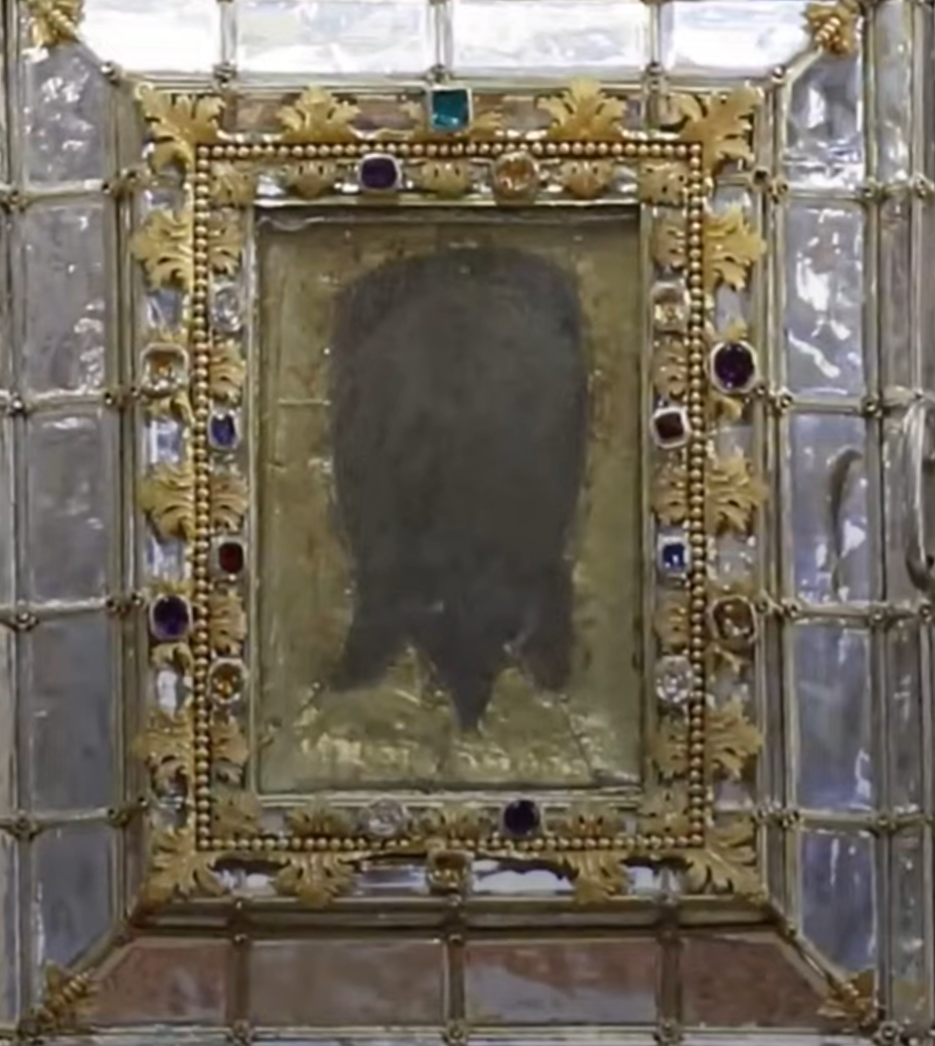
As a member of the conference of St. Vincent de Paul, he made it a duty to visit the sick poor. There were certain families whom he regularly went to see; and it was, principally, the miserable condition and isolation of the aged relatives of these families, that determined him to obtain the services of the Little Sisters. Even when other duties prevented him from attending constantly the weekly assemblies of the conference, he never neglected to visit the sick and assist them in their own homes. He requested the physicians to make known to him the most needy and the most abandoned; when necessity required it, he served them with his own hands. We know of instances, in which he did not hesitate to render, for several months, services the most repugnant to nature, and to perform them with a courage, a perseverance, and self-abnegation, equaled only by the Saints of God. These charitable actions were the charm of his life, and, to interrupt them, required nothing less than the occupations which held him captive before the Holy Face, and, later, the infirmities of age which confined him to the house. He, nevertheless, requested to be considered as a member of the conference, “an honorary member, on the shelf,” he said, with humility.
Another spiritual work of mercy had a peculiar attraction for him, visiting prisoners. The penitentiary of Tours, recently organized and regarded as a model of its kind, was naturally a field for his zeal. He offered his services to the chaplain, and was delighted to aid him, as far as he could, in the case of certain criminals whom he endeavored, in concert with the chaplain, to inspire with Christian sentiments. He frequently added pecuniary aid to his wise counsels and kind words, and he continued his good offices in their regard after their liberation from prison. We have read letters from several of these unfortunate beings, in which their gratitude is sometimes expressed in a touching manner. One among them writes: “Sir, I shall never forget during my whole life that once, when an unfortunate young man, abandoned by his friends, was a prey to despair, you charitably came to his aid, and as a skillful physician, administered to his broken heart the only remedy capable of restoring it to life. I owe you an eternal debt of gratitude, and when the difficulties I meet in my efforts to return to the path of rectitude, seem beyond my strength, I think of your charity, and I am encouraged to greater exertions.”
Another young man, a galley-slave from the convict-prison of Brest, writes to testify his gratitude, and thanks him particularly for his kind words: “What a consolation it was to me to receive from your paternal kindness a truly apostolic letter, one capable of helping a Christian to endure a cruel martyrdom! The details into which you enter are more soothing to me than you can imagine. I can repay you only by blessing the hand which traced the lines, praising the heart which conceived them, and proclaiming everywhere that a thousand times blessed is the mouth which utters such words.”
It even happened that God, rewarding the charitable care of this friend of the prisoner, granted miraculous favors to some of these unfortunate men. The following circumstance made a deep impression upon Mr. Dupont himself, and upon all who were acquainted with the circumstance.
A young man, named Adrien Bouchet, had been arrested at Tours with sixteen others, accused of having demolished the street-lamps during the riots which took place in the month of December, 1846, in consequence of the high price of flour. They were seized, upon the information furnished by an accomplice. Bouchet pretended to be innocent, declaring that, instead of being engaged in breaking the lamps, he was actually, at that very time, in bed. He was condemned, notwithstanding his protestations, to three months in the penitentiary; this threw him into a state of indescribable fury. The chaplain confided him to the care of Mr. Dupont, to calm him, instruct and prepare him for his first communion, which he had not made. “On entering hid cell,” says Mr. Dupont, “I was met by a terrible odor, the cause of which had been explained to me by the guard. A little straw replaced the hammock usually furnished prisoners. Bouchet scarcely raised his eyes. I felt the most intense compassion for the condition of the unfortunate man, who told me that, from his childhood, he had suffered from a disease, in consequence of which he had been prevented from making his first communion, from learning to read, or working at a trade; and that, being an object of horror to himself, as well as to others, he had been unable to support himself.” We heard, elsewhere, that when he was a child, his comrades could not endure him near them; they called him by ignominious names; even at church, when he was sent for instruction in catechism, the curate had been forced to place him at a distance, apart from the other boys. In consequence of this same disease, the poor young man infected the prison with so horrible an odor, that the guards of the penitentiary would place his food in the cell, and leave it as quickly as possible. “After four or five visits,” continues Mr. Dupont, “I sought the physician of the penitentiary. ‘I have already examined the condition of Bouchet,’ he said to me. ‘It is a disease without remedy.’ At my urgent entreaty, he consented to go to the cell; he suggested nothing but a costly instrument to be procured when he should be liberated from prison.”
It required all Mr. Dupont’s courage, and his great love of God, to enable him to surmount the repugnance of nature to approach the prisoner. For several months, his indefatigable benefactor continued his visits, although he was always, during that whole time, received with rudeness and addressed in abusive language. At last, by dint of patience and unvarying kindness, he succeeded in touching the heart of the unfortunate man, and persuading him that he sincerely desired to benefit him. Bouchet consented to accept a medal. “I gave him,” says Mr. Dupont, “a medal of St. Benedict, and having related several incidents for the purpose of exciting his confidence, I proposed to him to make a novena in honor of the great saint. When I visited him four days afterwards, I was agreeably surprised to notice a diminution of the disagreeable odor. ‘I am better,’ said the prisoner, as I entered. Circumstances prevented me from going again to the penitentiary during the novena which ended on Sunday. On Monday morning, as I entered his cell, Bouchet, radiant with delight, announced to me that he was cured. This was thirty-three days ago. The poor young man, impressed by the signal favor bestowed upon him, made his first communion with great fervor and piety. He was released from the penitentiary nine days ago, and he has since conducted himself in the most satisfactory manner. I obtained board for him with a pious family at la Riche. The good Mother Superioress of the Little Sisters of the Poor kindly gives him two meals every day. He takes the third at my house. He goes to the Brothers for instruction. They are delighted with him. Yesterday he made his communion for the intentions of the Jubilee.”
The charity which was overflowing in the heart of Mr. Dupont, found expression in various ways towards all kinds of persons. We know a priest who was studying at the Seminary, and who was accustomed at the commencement of the vacation, to make a visit to the servant of God; he never left without having received from him a valuable pecuniary gift. When he was raised to the dignity of sub-deacon, Mr. Dupont wrote in humble terms requesting to be permitted to purchase his breviary.
A huckster woman was one morning passing through the street, pushing before her a hand-cart. Just opposite the Chapel of the Carmelites, one of the wheels of her cart broke, and all her vegetables were scattered on the ground. Standing in the middle of the street, she cried aloud, lamenting the sad accident which had befallen her. Mr. Dupont was, at that moment, leaving the chapel where he had assisted at Mass; he kindly approached the poor woman, helped her to raise the cart and replace her vegetables. He consoled her by saying a few words of the goodness of God, and slipped into her hand, before leaving, a ten-franc piece, to compensate her for the loss she had sustained and repair the broken wheel.
One evening, he met a cart-driver who was leading a horse fastened behind his cart. The horse broke the rope and ran off. Mr. Dupont caught the animal and restored him to his master, who, without ceremony, requested him to hold the horse whilst he went to mend the rope at the wine-shop at the corner. Although Mr. Dupont suspected that the man would remain for another purpose, he readily consented, held the horse for more than an hour, and resented the abuse of his kindness only by saying with his usual gentleness a few jesting words to the man on his return.
An unfortunate woman was reduced to a state of utter destitution. A neighbor, who was deeply interested in her welfare, exerted himself to the utmost to secure assistance for her, but without success. At last he applied to a well-known Sister of Charity, Sister Angela, and begged her kind ministrations in behalf of his protegee. But the Sister, after paying one visit and making inquiries concerning the woman, thought it more prudent that she should take no further step in the affair. The good neighbor, impelled by his zeal, having heard of Mr. Dupont’s kindness and his influence with the Sisters of Charity, called to make known to him the circumstances of the case. Mr. Dupont received him with his usual cordiality, promised to speak of his protegee to Sister Angela, and accompanying him to the door, he saluted him politely, and placed in his hand, as he bade him good-bye, a twenty-franc piece, saying: “Make use of this for present necessities, until we can give greater help.” An alms thus bestowed upon an entire stranger, made so deep an impression upon the man, that it influenced him to lead for the future a life of greater fervor in the service of God.
Among the sufferers who flocked to his drawing room to have recourse to the Holy Face, were often those whose poverty was so extreme as to call largely upon his charity. He furnished them with food, gave them abundant alms, and it not unfrequently happened that some of them, after returning to their own homes, would importune him for aid.
His charity was great, and his generosity unlimited; but he carefully concealed them, and frequently conferred his benefits through the medium of others. A lady of rank, a Creole of his acquaintance, who had become reduced in circumstances, received from time to time remittances from Martinique, which she supposed were forwarded her from the products of her own possessions: they were a delicate offering from Mr. Dupont. One of his cousins in speaking of him, said: “When Léon receives his revenues from the Colonies, he orders a carriage, takes the funds and goes on a short journey, and returns with an empty pocket-book; when asked by his mother where the money is, he replies: “There is none left; we shall have more next year.’”
He was very prudent and discreet when necessity required precaution. He was notified on one occasion that a family in the city were reduced to the utmost poverty. One little girl had just died of consumption; her sister was ill, and the father, an incorrigible drunkard, did not even supply the family with food. Mr. Dupont had been informed that the wretched man would even search his wife’s pockets in the hope of finding the means to gratify his miserable passion. “Here is a case,” he said, “where alms should not be given in money.” He requested a friend to pay the butcher and baker regularly, and these poor people were provided with food for several months, without knowing who was their kind benefactor.
At another time, having been applied to in favor of a workman, who needed tools, he had, at that moment, no means at his disposal. In the afternoon of the same day, however, a charitable lady having presented him twenty francs for the poor, he requested a pious woman to take the money to the workman. It was on a Sunday and the bell had rung for Vespers. The woman, depriving herself of the gratification of assisting at Vespers, went without delay to fulfil the duty of charity. Mr. Dupont approbated the promptitude with which she had acted, and related what had once happened to himself.
“Urged by an interior impulse to give assistance to a family, which, however, had not been mentioned to him, he found, on his arrival, that they were so destitute as not even to have bread to satisfy the cravings of hunger; and they were, humanly speaking, without hope of aid of any kind, as their poverty was such, that they could not obtain credit. He rejoiced at not having deferred the good work he was inspired to perform, and decided never to delay a charitable act to which he was interiorly impelled.” He was careful to conceal, as far as possible, even from his servants, the alms he bestowed, which were abundant, not only in money, but in food and clothing. He would give away even the most necessary articles of his own wardrobe. Adele relates that his shirts disappeared by degrees, and when she saw a rent in his pantaloons, she was often obliged to say to him: “Sir, you must go to bed whilst I mend them; you have no others.” He obeyed her simply and cheerfully.
His generosity extended even to trifling things, and upon occasions, he was thoughtful of minute details. Thus, as it was a custom with some families to prepare the traditional Christmas-tree, Mr. Dupont entered into its spirit, and devoted himself to amuse and interest the children, who so impatiently and eagerly looked forward to the festival. The tree was decorated chiefly at his expense, and he made it a point to be present at the distribution of gifts. He contributed ten or twenty francs towards the entertainment of the poor children who were feasted by the family on that day. Whenever he visited a friend, particularly in the country, or when there were children at the house, he, never failed to carry tarts, cakes, and candies, or bottles of Martinique rum. He provided these in large quantities, giving generously, and putting every one at ease by his cordial and affable manners.
Mr. Dupont extended a warm welcome not only to his intimate associates; his refinement and courtesy were attractive to strangers and Protestants, some of whom became his firm and constant friends. We may mention, among others, an excellent Catholici Irish family of the name of Straker, who remained some time at Tours. The father, of English descent, was a Protestant.
One of his daughters writes: “From our earliest childhood, my mother had taught my brother, my sister, and myself to offer constant prayers for the conversion of my father. A secret presentiment seemed to urge her to do violence to heaven, to obtain the object of her ardent desires, and, although we knew Mr. Dupont only by reputation, we called upon him. He received us with great courtesy, inscribed my father’s name upon the register of the Nocturnal Adoration, and assured us, with a confidence which seemed to have become inherent to his nature, that we might rely upon this conversion as a certainty. He turned over the leaves of his Bible, which was always open on a desk, and read us a text in confirmation of the promise he had just made us. As he talked, he became radiant with joy; he spoke to us of God, of himself, of his daughter, who had been dead two years, of the happiness he experienced in serving his Divine Master. . . . We reluctantly left him after a visit of an hour; I felt that contact with this fervent soul had made upon my heart an impression, which would never be effaced. A few days afterwards, he returned our visit, and, although my father could not comprehend this language of faith, so entirely new to him, he began to frequent the Cathedral of Tours, assisted at mass, even in bad weather, studied Catholic books, and died in the bosom of the true Church. Mr. Dupont visited us frequently during the affliction caused us by the death of my father, testifying the sympathy of an old friend, rather than the courtesy of a recent acquaintance. The loss of my excellent father was a heavy cross to my mother, but the servant of God always succeeded in consoling her. ‘You grieve,’ he would say to her; ‘you should rather be overpowered with gratitude. The body which perishes, is a wall which falls; your husband is nearer to you now than when he was in life.’ ‘But,’ said my mother, ‘his illness was so short, and he lived sixty-four years in Protestantism. He was converted so late in life.’ ‘Well, that only gives you additional assurance of his salvation. Three hours sufficed the good thief. Did not your husband die, pardoning his enemies, and at peace with every one? Were not his last words those of our Lord: “My God, into Thy hands I commend my spirit?” How, Madam, can you permit yourself to doubt, or to waver in your confidence, when he used the very words of our Savior expiring on the cross?’ From that day the man of God testified an interest in my family which never flagged. My mother was forty-four years of age when she was left a widow with three children. Mr. Dupont’s influence turned her heart to God; he persuaded her to receive frequently the sacraments, which hitherto she had approached only on the principal festivals of the year. His kind heart suggested to him many delicate attentions which were gratifying to my mother. On the 17th of March, feast of the patron Saint of Ireland, he would send her a bunch of clover and beautiful violets with a branch of hawthorn, which had bloomed miraculously on the tree planted by St. Patrick on the banks of the Loire.(1) He wished, by this delicate attention, to express to the widowed woman, that the apostle of her nation had conducted her to a hospitable land. The act appeared to me particularly beautiful, evincing a spirit of courtesy worthy of an ancient Christian cavalier; it was French refinement elevated by sanctity.”
There were few families among his intimate friends who could not relate similar circumstances indicative of his charity, ingenuity, and delicacy. A Christian mother of Tours furnishes us an example of the same characteristics. She writes as follows: “I made the acquaintance of Mr. Dupont in 1849. I had several times visited his mother in company with one of my friends, who was intimate with her, and who frequently spoke to me of the virtues of this holy man. At that time, I was so little inclined to piety that the thought of becoming acquainted with a saint, made no impression on me. He seemed to me just like other people, although my friend insisted that he had received me with particular cordiality. My first visit was followed by others; I was attracted by something indescribable, for which I could not account. I felt perfectly at home with him; I spoke little and listened eagerly. All was conducted in the simplest way; without appearing to do so, he instructed me in many things of which I was wholly ignorant. Not knowing what a saint was, I regarded him as a very good, pious man, who was especially kind to me. Wherever he saw me, he met me with a pleasant smile. Sometimes we would remain standing, so engaged in earnest conversation that we paid no attention to the passage of time. The holy man! He knew the good he was doing me, and I was as unconscious of it, as is the plant, of the benefit it derives from the dew of heaven. However, grace was accomplishing its work, and we had become true friends. I confided to him the state of my soul, I told him what I felt that God demanded of me; but it was only after a long time that I comprehended how valuable his counsels had been to me. He was the best director I ever knew. It was, I am convinced, through his prayers that I obtained the immense grace of the conversion of a member of my family very dear to me. He loved that soul for which he had prayed so fervently; he said to me several years afterwards in the playful manner in which he often spoke: ‘He can teach us now, and we must bow before him.’ In his own home, and when with a circle of intimate friends, he was bright and cheerful; but at the same time, his joy was moderate and gentle. When he visited us in the country, he always filled the carriage with packages of cakes and candies for the children whom he loved very much. The children, of course, loved him dearly in return; but the larger ones found his conversation on pious subjects very long; for, when good father Dupont commenced speaking of God, he never wearied. His charity assumed all forms. If any one was ill in the house, he found time, notwithstanding his numerous occupations, to call and make inquiries about the invalid. I was once confined a whole month to my room with the measles. No one ventured to visit me; we had, at that same time, four children ill with the measles. Mr. Dupont, however, would come several times during the week, and remain two or three hours in conversation. One of my little girls was very ill; the Doctor gave us no hope of her recovery; Mr. Dupont came daily and prayed by the side of her cradle, and at the very time that her condition seemed the most desperate, he arose from his knees and said: “She will be better to-morrow.’ The following day she was out of danger; it was certainly the effect of his prayers alone, for no application of oil had been made. I cannot recall, without emotion, his kindness to me, and the simplicity with which he accommodated himself to my capacity. On my observing to him that I knew nothing, and yet I comprehended all he said to me, he replied with his sweet smile by repeating the following verse of the Psalms: “Quoniam non cognovi litteraturam, introibo in potentias Domini. (Ps. ixx, 15.) Because I have not known learning, I will enter into the powers of the Lord.’”
These charming details sufficiently explain the particular veneration in which Mr. Dupont is held by certain families, and the confidence with which, in their own homes, they have recourse to his intercession to obtain favors from God.
1. This tree is a hawthorn which grows in the village of St. Patrick in Touraine. Every year it is in bloom in mid-winter. Tradition relates that the patron Saint of Ireland crossed the Loire, which was swollen by heavy rains, on his cloak, using his cane as an oar; having reached the shore, he planted the stick in the ground. The following day, although it was in the depth of winter, the stick had taken root, and it was covered with flowers. The miracle has been renewed every year since that time to the present. Every winter, Mr. Dupont had on his mantel a small branch of this hawthorn in bloom, which he took pleasure in exhibiting to his visitors. We have ourselves seen it frequently.