His Hope — His Love of God — His Mortification.
From Mr. Dupont’s faith and humility, arose that simplicity of heart, that unalterable serenity, which his friends admired, and which strangers never failed to remark at the first glance. It Was the radiance of hope. This second theological virtue had its roots so deep in his heart that nothing whatever had power to discourage him. We have seen how he prayed, both at the Nocturnal Adoration and before the Holy Face. He prayed with unshaken confidence and perseveringly, until the grace demanded had been obtained. “It is certain,” he said, “that we cannot go against the will of God. But as we rarely know it until the moment of its execution, nothing prevents us from persisting with confidence in our demands. Our Lord has commanded us to be persistent. Moreover, our confidence acquires a degree of merit in proportion to the difficulties which present themselves.” Such was his confidence in the providential action of God over the world, that he rejected with disdain all the reasoning of human foresight. “What do we know of the future?” he would ask. “It will, in all probability, be just the reverse of what we expect.
All these reflections are time lost. It is a distrust of the mercy, an outrage to the infinite merits of the Divine Victim.”
He encouraged his friends to foster such sentiments. To one of them, a layman like himself, and of similar tastes, he wrote: “Let us pray for France. In your solitude, you have a great deal in your power. It needs but one soul united to our Lord, and treating with Him of the interests of eternal life, to draw down from Heaven innumerable graces. Sacred history teaches us this.” “Let us pray with confidence,” were words forever on his lips. “Let us blush to be wanting in that confidence which obtains whatever it asks.”
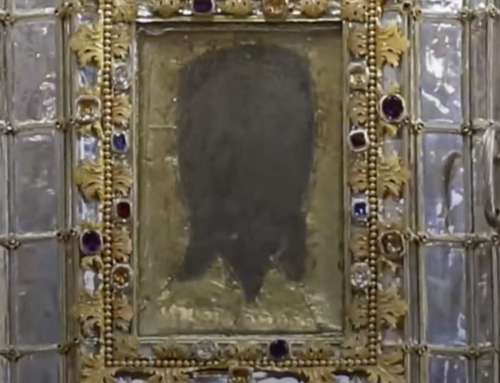
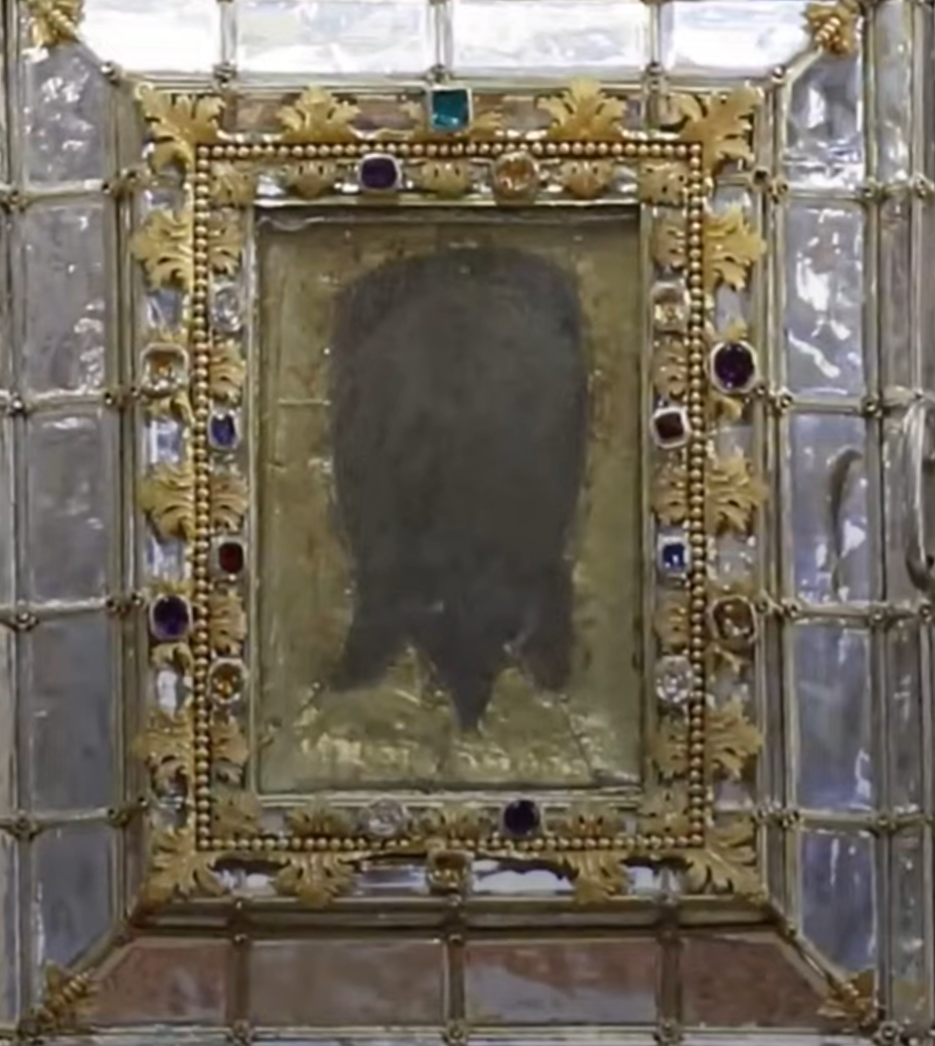
As to himself, he possessed it to a degree of deliberate conviction, whose truth and solidity theologians themselves were forced to admire. A venerable curate of the diocese of Verdun furnishes us an example of this: “Twenty years ago,” he writes, “Mr. Baudier, Superior of the Seminary of Tours, went to visit Mr. Dupont, taking with him his brother, a professor of theology, and myself. After the ordinary salutations were exchanged, we were admitted into the room where the picture of the Holy Face was venerated. With Christian courtesy Mr. Dupont invited us to prolong our visit, during which a very interesting discussion occurred between him and the professor of theology. The subject was confidence in prayer. The professor maintained that when we ask of God benefits of the purely natural order, we should beg them, if not with indifference, at least without an urgency which might be contrary to the Divine will. Mr. Dupont replied with a vivacity of faith, and an appropriateness which gave him the decided advantage. “Not at all, Professor, we should employ a kind of importunity; our Lord Himself invites us to this when presenting us the charming example,— in which no distinction is drawn,— the example of a friend arriving in the middle of the night, and knocking repeatedly at the door, of his friend, until the latter, overcome by his importunity rather than inspired by friendship, rises and opens to him.’ These words appeared conclusive, and made upon me an impression which the lapse of twenty years has not effaced. I consider it a duty to recall them now, to the honor of the venerated thaumaturgus, for I am the sole survivor of the four who were present on that occasion.”
Regarded as a Catholic dogma, this confidence was in reality unassailable, because it was founded upon the promise of our Lord in the Gospel: “Whatsoever you shall ask in prayer, believing, you shall receive.” Mr. Dupont had this sacred text forever upon his lips. He also quoted frequently the beautiful thought of St. Hilary: “God, Who inspires us to pray to Him, cannot refuse to hear our prayer.”
A fervent layman of Paris, the director of an important work of zeal and charity, was complaining in Mr. Dupont’s presence of a weakness of sight, which threatened to terminate in blindness. The servant of the Holy Face pointed to the venerated picture, and proposed to recite the prayers for his cure. The patient objected, saying humbly: “Would God attend to so small a want of a miserable creature like myself? Have I not other more necessary favors to ask of Him?” Mr. Dupont considered his answer as an evidence or want of faith and confidence, and reproved him severely: “Do you not see that you are placing obstacles to the gift of God? Ask Him decidedly to cure you, only adding: ‘My God, for Thy glory.ִ’”
As a true and enlightened Catholic, Mr. Dupont did not fail to rest his confidence upon the intercession and protection of the Blessed Virgin and the Saints. We have already seen the confidence he placed in the medal of St. Benedict, the water of La Salette, and the oil of the Holy Face. He made no less use of the medal of Mary Immaculate, called the “miraculous medal.” He was among the first who were informed of the apparition vouchsafed to a pious Sister of St. Vincent de Paul, for the purpose of honoring Mary’s privilege of being “conceived without sin.” During his whole life, he had recourse to the medal struck on that occasion, and, through it, he obtained from the august Virgin many graces, cures, and conversions. As he considered Satan, the spirit of evil and the enemy of man, to be the original cause of all our miseries, he constantly made use of prayer and supernatural means, not only to obtain spiritual favors of every kind, but also to combat corporal infirmities, either in connection with medicine which he did not reject, or after a positive decision that remedies were of no avail. He never doubted the efficacy of these means; if employed unsuccessfully, he attributed the failure to want of confidence.
But the chief foundation of his confidence was what he called the “merciful goodness of our Lord.” Thoroughly imbued with this sentiment, he was never disturbed by any adverse event. His hope in the future was not diminished by revolutions, and the calamitous disorders which accompany or result from them; they seemed rather to strengthen and augment it, because he viewed such events in their supernatural bearing, and he thought, moreover, that the hand of God was evident in the miraculous incidents so frequent in our day. “Everything concurs to prove,” he writes, “that our Lord, in His merciful goodness, wishes to pardon the present generation, and that He no longer holds captive the fire of love with which His Divine Heart desires to inflame the world.” He adds: “Do not present this idea to men who are accustomed to regard only the difficulties in the way. He who says: I cannot, never succeeds. St. Paul was more prudent and better informed when he exclaimed: I can do all things in Him Who strengthens me.”
He often said: “Many signs convince persons of faith, that the time of combat is near at hand.” But what he calls “the time of combat” neither troubles nor terrifies him. When in the midst of the disorders by which society is agitated, he sees Catholics contending with revolutionary men for an election, defending a right, or casting votes for a law, he encourages his friends by quoting the words of Scripture: “Fear not the multitude of your enemies; for the battle is not yours, but God’s: Non est enim pugna vestra, sed Dei” He loved to recall the passage in the Second Book of Paralipomenon whence the above text is taken, in which it is related, that the holy king Josaphat, in the midst of the perils surrounding him, and uncertain of the issue of the battle about to be fought between the children of Israel and their enemies, cried out to God: “As we know not what to do, we can only turn our eyes to Thee.” And this confidence of the pious king and of his people was recompensed by a brilliant victory. “It is good, therefore,” he added, “to abandon ourselves to God, and to remember that the result of every combat depends, not upon us, but upon God alone.”
The secret of this unalterable serenity and unvarying confidence, was his intimate union with our Lord, and the love which burned in his heart for his Divine Master. “What would we not do to please Him,” he said, “if we knew Him, if we had the intelligence of His love deeply implanted in our hearts? Thy enemies, O Jesus, penetrated to the very depths of Thy heart, and we, who desire to be Thy friends, abandon our hearts, alas! too often, to thoughts so frivolous that Thou canst not enter them. Reign over them, nevertheless, O Jesus! and make us free, notwithstanding our cowardice, by subjecting us to Thy holy sovereignty.”
Speaking of a man of God who was full of fervor and zeal he said: “He is a soul inflamed with love, burning with the desire of procuring Veronicas for Jesus. It is impossible to reflect upon the Passion, without ardently desiring to offer some consolation to our Lord. It is a certain means of washing away our sins in the ocean of mercy.”
From his love of Jesus, came the love of his neighbor and zeal for the salvation of souls. The conquest of souls was ever the leading thought in his works of prayer and charity; for, superior to every other consideration, was the spiritual good of his neighbor. He was frequently recompensed by striking conversions, or sincere homage rendered to the faith. But when the contrary happened, how extreme was his sorrow! We give as an example a circumstance he relates in a letter to a missionary of America, whom he had formerly accompanied to the port whence he was to embark: “I have just been to Nantes, to place, as pilot on board of a vessel, a young man who was recommended to me by an intimate friend. But how far different was the journey we made together to the same port! My young protégé has not faith. I appointed for our rendezvous the church of Sainte-Croix at half-past seven in the morning. I arrived there in time to assist at Holy Mass three times. The hour appointed having passed, I was about to leave the church to discover what had detained the young man. We met at the entrance. ‘I am here,’ he said to me. ‘Very well, we will make a short prayer.’ ‘No.’ ‘Why not? You are going on a voyage of three thousand leagues.’ ‘I would not do so willingly.’ Thereupon, with my heart full of sorrow, we proceeded on our way. Will you not pray for him? I am quite certain you never hear such words from the lips of your savages. It is the rottenness of Europe which engenders such miseries. Pray fervently.”
After having travelled in company with Mr. Dupont, Sister Francis Xavier, a fervent religious, whose life and letters form the subject of an interesting volume recently published, wrote: “God, in His goodness, gave me as a travelling companion a pious man of the world, named Mr. Dupont, a resident of Tours. The night was passed as if we were at the gate of Paradise. We talked the whole time of Jesus and Mary. He is far more devout than I am. After completing the rosary, he made me say a large number of Aves for the conversion or perseverance of persons, who needed the one or the other; from eleven to twelve we made the Stations of the Cross on an indulged crucifix. We meditated aloud by turns. When he proposed the latter, I feared I should either laugh, or be vain if I should have good thoughts. Oh! if you knew the depth of faith, simplicity, and love in the heart of that man! Instead of laughing, I wept. We could not tear ourselves away from the cross of Jesus, at the foot of which we found Mary. Every journey made by this apostolic man is a pilgrimage. He is a saint, an angel, sent to me by God to support and humble me; for I am a worm in presence of his profound faith and sublime humility. Whenever he perceived a steeple, he recited in Latin a prayer of St. Francis of Assisi: ‘There, and in all churches of the world, Thou art present, O Jesus!’ And then his soul became absorbed in the thought of the love of our Lord. I slept, but he continued his prayers until morning. When I awoke, he said to me: ‘We must speak of God or be silent.’ We spoke of our good God, and, to profit by his counsel and example, in my turn, I speak of Him to you.”
His love of our Lord and his charity for man so absorbed his whole being, that he wished never to speak on another subject. “It is so consoling,” he said, “to converse heart to heart of Jesus, Who suffers so strangely at man’s silence in his regard! Before the Incarnation, the Holy Ghost declared that there was an obligation to talk of God: Omnis enarratio tua in praeceptis Altissimi: ‘Let all thy discourse be on the commandments of the Most High.’ Then, when Jesus comes in person to explain the old law, and promulgate the law of love, He assures us that where we are collected, even in small numbers, in His name, He is in the midst of us, to make us comprehend the difference between pious colloquies and worldly conversation. Therefore, I think we should often say to the giddy ones of the world: Si scires donum Dei! ‘If you knew the gift of God.’ And of what else ought we to speak? But, in order to speak, we must love; ‘for the mouth speaketh from the abundance of the heart.’ Let us then be united to our Lord, that not only His blood may become ours, but that His thoughts, His words, His actions, may also become ours! When the great Apostle said: ‘We are the good odor of Jesus Christ,’ he, undoubtedly, no longer lived, but Jesus Christ in him. How much we might say without going beyond the circle in which a Christian should remain enclosed!”
Even when at table, when making a visit, in his room, on a journey, God was the habitual subject of his conversations. If any other was commenced, he either remained silent or slept. An old sea-captain relates the following incident: “Marceau was one day ascending the Loire on a steamboat, in company with Mr. Dupont. The latter, resting his head on a table, fell asleep. Some engineers were conversing on ships and machines. Mr. Dupont awoke only when they were to land at Nantes.
Marceau inquired why he slept so soundly. ‘It appears,’ he answered, ‘that those gentlemen could talk, during an entire day, of every thing but God. I borrowed several hours from the night, and I shall, at that time, have the leisure to meditate,’ Marceau assured me,” continued the narrator, “that when he was with him, and long conversations turned upon profane sciences or similar subjects, his friend would sit apart, and re-commence the sleep of the steamboat.”
But if it happened that the reputation of his neighbor was attacked, or charity was wounded, he did not keep silence; sometimes he even permitted himself a frankness in his remarks which was only authorized by his reputation for sanctity, and softened by the gentleness of his character.
As for himself, an uncharitable expression never escaped him. He was ever ready to excuse the faults of others, or to beg pardon for them of God. One day, a young man who was a fervent Catholic, being inflamed with divine love by his conversation on the Eucharist, went, on leaving him, to the Cathedral and knelt in prayer before the altar. Soon after, an officer in full uniform, holding by a leash an enormous dog, crossed the church, and passed before the altar without the least recognition of the presence of our Lord. The pious young man was pained at the irreverence he witnessed, and, on his return to Mr. Dupont’s, he gave vent to the indignation and bitterness of his soul. The servant of God interrupted him: “My young friend,” he said gently, “be calm, and imagine it was a poor blind man who passed by you. How could you expect him to view things in the same manner as you do? Let us do something better than express our indignation; let us pray God to open his eyes and grant him the gift of faith.” Both knelt before the Holy Face, to offer a prayer for the poor unbeliever. The same love of God and his neighbor, which inspired Mr. Dupont with exalted views and delicate sentiments, led him to acts of Christian mortification and evangelical penance. This spirit of mortification was observable in him on his first arrival in France. A Superioress writes us: “We noticed in Mr. Dupont, during his earliest visits to Saint-Servan, an austere virtue; he possessed a rare spirit of recollection and prayer. He made every night the holy hour, and he endeavored to propagate this pious practice.” In Lent and upon fast-days, he took no food until noon, and then his meal consisted of one dish; at collation, he took only uncooked salad. On Ash Wednesday, he ate bread which had been cooked under the ashes; on Good Friday and Holy Saturday, he did not break his fast until six o’clock in the afternoon.
The least suffering or corporal inconvenience which God sent him, was food to his spirit of mortification, and he was very careful to derive profit from it. He once had a boil, “which,” he says, “is so placed on my right wrist as to prevent my writing, particularly since the incisions and application of caustic. It would have given me pleasure to converse with you. Fiat! If God shows me mercy, I shall have a long life, because I have great need to do penance.”
In the same spirit, the recluse of Saint-Etienne Street imposed on himself in 1869 a kind of sacrifice, trifling in appearance, but the merit of which will be appreciated by those who, from circumstances, may have been called upon to make a similar one. As it was the common custom among the residents of warm climates, particularly of the Colonies, Mr. Dupont had, from his youth, contracted the habit of taking snuff. He undertook to deprive himself of it. “Can you believe it?” he writes to his friend and compatriot Mr. d’Avrainville, who had the same habit, “after using tobacco for forty-nine years, I have discarded the snuff-box. Next Saturday will be the twenty-eighth day, and I feel not the slightest inclination to resume it.”
His elegant and polished manners, partaking of the grace of the nobleman and the dignity of the magistrate, the irreproachable neatness of his dress, his beard shaved daily, the fine white linen he always used, betrayed neither to his friends nor to his servants the austerities he practiced. Those who were in the same house with him never suspected his frequent use of the discipline. Only one person knew it during his life, Mother Mary of the Incarnation, the aged Prioress of the Carmelites, to whom, on account of her age, her virtue, and the confidence he had in her, he spoke freely of his interior; and even she drew from him by stratagem the secret she suspected. We have learned through her, that at a certain period of his life, after what he styled his conversion, he practiced this kind of penance regularly every evening before going to bed, or when he rose at midnight for the holy hour. The Reverend Mother, having once asked him how he managed not to be heard by the persons of his household, he in formed her, that adjoining the room which then served him as a sleeping apartment, there was a private cabinet where he retired, either during the day, or at night, to “practice his devotions.” “It is there,” said the Reverend Mother, giving these details to her spiritual daughters, “that the holy man disciplines himself to his heart’s content.” In truth, the holy man did not spare himself. He even requested a hair-shirt of the Mother Prioress, and from her testimony we can say, that no instrument of penance used by austere orders was unknown to him. We have still his iron discipline which was found after his death(1). But, like many other saints of the same character, he was extremely careful to remove all proofs of his austerity. If we may accept the statement of another grave authority, when he occupied a car alone in travelling, he disciplined himself in a spirit of reparation, to “expiate,” he said, “the sins committed on the railroad.”
He belonged, in this respect, to the school of Father Lacordaire. We know from the account of his private life, how constantly the illustrious Dominican practised this mortification, so opposed to the pride and sensuality of our age, and how often he counselled young persons to adopt it as a sovereign remedy against temptation. The servant of the Holy Face also gives the same advice in words which betray his secret.” An individual, painfully tempted to sadness and discouragement, opens his heart to him and seeks his advice. “You have,” he answers, “in your own hands the means of benefiting yourself. There is a remedy, which is repugnant only to such as have never made a trial of it seriously. I mean corporal mortification. I chastise my body and keep it in subjection, said the great Apostle, and justly, since our Lord did not consent to deliver him from temptation. Reasoning on the subject does no good; the body is the animal part, and against it, words are of no avail. It needs blows; the discipline, taken with humility and the intention of inflicting punishment, repairs promptly the forces of the soul, and restores it to its dignity, if I may thus express myself. The body bends to the yoke, and acknowledges the baseness of its extraction. You will soon be restored to peace with yourself, and you will have your eyes fixed, in future, on Heaven.” As the person was unwilling to employ this hard and strange means, Mr. Dupont insists: “I am pained to see that you continue to ask advice, and to reason upon your spiritual condition. You are wrong to reject the means I suggested in my former letter. Penance! Penance! that will fill your heart with joy, and establish you in the friendship of our Lord.” Again he writes: “You plead in vain, that you have already suffered greatly. Oh! if you knew the value of a voluntary suffering! I pray God to bestow upon you abundant lights on this subject… St. Paul chastised his body; all the saints have followed his example, and our Lord desires to impart new vigor to the spirit of penance, in order that many souls may labor with him for the moral resurrection of the people sunk in philosophism. The evil is greater than we imagine. The number of those who love their bodies is very great, and they are strongly inclined to believe that the sufferings of Calvary suffice. Reason persuades them that it is useless to imitate the saints in their treatment of the flesh. But what is now passing under our eyes, makes it evident that our Lord wishes to lead us back to the only way of salvation, to penance, which He first embraced Himself that he might give us the example.”
The above incidents and quotations prove how thoroughly this great servant of God understood, and how perfectly he practised, the fundamental virtues of the Christian life. It might, in strict truth, be said of him that he “was the man of the three theological virtues.” We have dwelt upon the “simplicity of his faith,” “the fervor of his hope,” “the ardent zeal of his charity.” Faith, however, was dominant; it vivified every action of the day, was active every moment of his life. He frequently arose at two or three o’clock in the morning, in winter as well as in summer, he prayed, meditated, went to the earliest Mass in his part of the city, and communicated. Having returned to his room, kneeling or seated between the Holy Face and the Holy Scriptures, he devoted himself to the spiritual occupations we have described; and this was the daily routine for at least the last twenty-eight years of his life. He is depicted by St. Paul: “The just man lives by faith;” Justus ex fide vivit.
We should not, however, conclude that this eminent perfection was natural to Mr. Dupont, that he attained it without effort, without a struggle with self, and that it was the result of a highly gifted character and disposition. On the contrary, in his youth, a love of pleasure had a powerful sway over him. One of his relatives describes him when a child, as the life and soul of the sports of his age. As a young man, he was passionately fond of hunting, dancing, driving fine horses, and possessing handsome equipages. By disposition, he was quick, impetuous, gay, self-willed even to obstinacy; he carried written on his hand evidence of the latter quality in the scar, which was never effaced, of the wound received on the gate of the castle of Chissay, the effect of his thoughtlessness and tenacity of purpose. He did not willingly yield to others; he wished to be first, under all circumstances. This natural asperity and violence of temperament were manifest, at the commencement of his life of piety, even in matters of controversy. We must, then, conclude that the virtues of Mr. Dupont, like the virtues of all the saints, were the triumphs of grace. His merit was in his correspondence to the graces bestowed upon him, and in resolutely profiting by them, to advance in the path of perfection.
1. It hangs in the sacristy of the oratory, in that part called the Chamber of Miracles, bearing the following inscription: “Here the servant of God macerated his flesh by long and bloody flagellations.” Castigo corpus meum et in servitutem redigo. “I chastise my body and reduce it to servitude.”