The Work of St. Martin.
While Mr. Dupont devoted his life to works of charity, one illustrious model was always present to his mind, one important object was, more than all others, the aim of his prayers before the Blessed Sacrament. This model of charity was St. Martin; the object of his fervent and constant prayer, was the rebuilding of the celebrated Basilica of the thaumaturgus, which had been destroyed by the revolution.
When the pious Creole of Martinique fixed his residence at Tours in 1834, St. Martin no longer received the homage of the faithful as in former times. We have mentioned above how he had been drawn by an interior attraction to the corner of Descartes and St. Martin streets, where he would stop to pray; we have, also, spoken of the Stations of the Cross which he made at night, through the streets, in company with some friends. But few persons, however, participated in his devotion to the glorious patron of the city; still less, did they entertain a thought of reconstructing the ancient church formerly dedicated to him. Mr. Dupont, alone, cherished the unalterable hope. A simple and beautiful idea, inspired by charity and put at once into execution, was about to become the germ of the great enterprise.
Mr. Dupont had discovered that the old garments distributed to the poor were often rejected and sold by them, on account of their miserable condition. Hence he conceived the idea of making this distribution a separate work, under the patronage of St. Martin, in commemoration of the military catechumen dividing his cloak with a poor man. It was, no doubt, his devotion to the holy bishop, and his desire to rekindle this devotion in the hearts of the inhabitants of Tours which inspired him with the charitable idea. It originated, also, in his supernatural respect for the poor, in whose persons he viewed our Lord Himself, and “Whom,” he said, “he desired to honor whilst clothing the naked.” At another time, he calls it “an unpretending work, which, quite naturally, should originate in Tours, but, which ought to be adopted in every city of France, because the incessant increase of luxury rendered it indispensable.”
Mr. Dupont gives the following account of the organization of the Clothing Society: “A new work, having for its title, ‘The Work-room of St. Martin has been added to those with which you are already acquainted. Our object is to form a society to receive old garments, which will be repaired in the best possible manner, and to purchase new ones, if there should be money in the purse. Pious workwomen will devote themselves to the necessary mending, asking, in consideration of their services, only what is absolutely requisite for their support. Ladies, zealous in the cause, beg clothing and money, and sometimes aid in the sewing. A Board of Managers directs the Association.” The Board was composed at first of the presidents and secretaries of the Conference of St. Vincent de Paul in Tours. The first meeting took place on the 6th of December, 1854, two days before the definition of the Immaculate Conception. At the preliminary assembly held on the 11th of November, feast of St. Martin, Mr. Dupont had been chosen a member, and, after the departure of the president, Mr. Bailloud, the united and persistent entreaties of his colleagues obliged him to accept the presidency. It was decided, at the same time, that the meetings should, in future, be held at his house, in the very apartment which has since been converted into a chapel, and which became the central point of all the plans devised for extending the public veneration of St. Martin.
From the very beginning, notwithstanding his office of president, Mr. Dupont, whose piety led him by preference to what is simple and unpretending, avoided long discussions, which he knew would prove fruitless, and he objected to multiplied practices. He relied more upon the efficacy of prayer than activity on his part. Like all other proceedings connected with the honor to be paid St. Martin, the Society for clothing the poor met with opposition in its commencement, and many difficulties were to be overcome before the regulations were approved. The man of God was contented with prayer, being fully persuaded that nothing would be accomplished if the Saint did not exert his power in their regard. Besides, it was necessary to make the trial of the efficiency of the Society. At the end of eighteen months they experienced the effect of the intervention of the holy protector of Tours; the obstacles were removed, and Mgr. Morlot approved the regulations of the Society under the title of “The Work of St. Martin to Clothe the Poor.” Mr. Dupont, in concert with his friends, had drawn up the rule. He submitted the whole to the Archbishop, who examined it carefully, made a slight change in certain articles, and gave his final approbation. The rule, which is still observed even in the minute details, is very practical, and bears the impress of an enlightened charity.
The work became popular at once. In the course of the first year the president wrote to a friend: “During the past four months, we have distributed three hundred new garments. We have also had the consolation of knowing, by the legacies which we have received, that rich persons were pleased to find the means of assisting the poor.” The honor rendered to St. Martin had likewise increased; for the members of the Board, whilst adopting every method to relieve the indigent, did not neglect the glory of their holy patron. They had already, in one of their meetings, expressed the wish that the novena made in preparation for his feast, should be more imposing than usual. Hitherto, the custom had been to make at the Cathedral, during the nine days, only a short meditation with a few vocal prayers. The desire of the members was realized in 1856, when the novena was preached by a Capuchin religious, the Rev. Father Bonaventure. The enthusiasm existing in the city, suggested to the eloquent Father, at the termination of his instructions, to propose to the people to erect a statue of St. Martin on the top of the tower of Charlemagne. The proposition was never carried into effect, but the popular sentiment was evinced by the pomp with which the ceremonies were conducted.
On the day of the feast, November 11th, Cardinal Morlot celebrated the Mass for the work of the Clothing Society, in the “Little Chapel of St. Martin.” At the meeting held on the same day, an account of the present condition of the work was read by the director, M. l’Abbé Verdier, who, in the name of the Board, expressed the wish “to see collected the scattered stones of the Basilica, and to restore to the veneration of the faithful, the great thaumaturgus of Gaul.” The proposition was warmly welcomed by the Cardinal. Thus the grave question of reconstructing the church of St, Martin, was, for the first time, broached publicly, and the desire which Mr. Dupont had cherished in his heart, and which had been for twenty years the object of his prayers, at last found an echo: the precious seed was not long in producing its fruit.
In the same year, 1856, Cardinal Morlot was at Rome. The members of the Board, having assembled on the 14th of December, upon business relating to their Society, agreed to apply to their venerable Archbishop, petitioning him to be their mediator with the Sovereign Pontiff and obtain from him a blessing upon their project of restoring the Basilica. Mr. Dupont requested that the letter to be forwarded to Rome, should be dated December 18th, the festival of St. Gatian, in order to secure for their undertaking the protection of the first bishop of Tours.
The petition met with a favorable reception from the Cardinal, and the benediction was graciously bestowed by Pius IX.
Mgr. Morlot was transferred to the see of Paris, made vacant by the assassination of Mgr. Sibour, and was succeeded by Mgr. Guibert, who, from the very first, showed marked favor to the cause of the faithful who were so zealous to make reparation to St. Martin.
It was important, above all else, to discover the true location of the glorious tomb.
The members of the Clothing Society, among whom was the chief engineer of the Railroad, Mr. Ratel, made for that purpose a well directed and careful research. They met with every encouragement from their president, Mr. Dupont, whose mind often reverted to the remark made to him by the vegetable vender the first time he had gone to pray at that spot. Finally, through information derived from the city architect, they discovered in the archives of the prefecture a plan of the year IX, indicating the whole of the Basilica and the streets contemplated at that time. By comparing the plan with the actual condition of the locality, it was evident that the tomb did not lie beneath the street itself, as had been supposed, but beneath a row of private houses. It became absolutely necessary, in order to gain possession of this precious treasure, to purchase three of the houses. The members took measures to make this important acquisition without delay. They needed a broker to carry their plan into execution. Providence offered them one in the person of the Count Pedre Moisant, who had been recently admitted to the Board. This fervent and generous Christian presented a hundred and fifty thousand francs to aid in the purchase. The munificent donation decided Mgr. Guibert to abandon the idea he had entertained of restoring the worship of the blessed pontiff in the church of St. Julian.
But the work of God was destined to have its trials. The perpetual enemy of St. Martin seemed suddenly to arouse himself, to take his revenge by creating difficulties between the ecclesiastical authority and the Board. Differences of opinion existed, it is true, only on minor points; but they sufficed to arrest the progress of the work, and sometimes even to menace its entire cessation. In the midst of this anxiety which caused him much interior suffering, Mr. Dupont, we are told by his fellow-members, excited their admiration by his tranquility, humility and faith. He was unwilling to seek light elsewhere than in prayer, nor any other help than confidence in God. Guided by his advice and stimulated by his fervor, the members of the Society undertook quietly and without parade several pilgrimages. Here, Mr. Dupont was perfectly at home. In his opinion, prayer and pilgrimages would bring all their designs to a successful issue, and the man of God was not mistaken. It was not long before Mgr. Guibert, addressing the people, and assuming the responsibility of the enterprise, said: “It is not I who have fixed the time. … a voice has spoken from the depths of souls: its echo has been universal. I myself have been impelled by a mysterious force; I have not created it, I have only obeyed its irresistible power.” On the feast of St. Martin of that same year, what transports of joy and hope filled the heart of Mr. Dupont, when from his seat in the Cathedral he heard Mgr. Pie, the illustrious bishop of Poitiers, in an admirable panegyric, exclaim at the commencement of his peroration: “To you alone, Monseigneur, it belongs to decide upon the time which Providence has decreed for this work of regeneration. But as soon as you speak, France, the whole world, will listen to your voice. Popes will hear you, bishops will hear you, priests will hear you, consecrated virgins will hear you, all religious orders will hear you, the poor will hear you, future ages will hear you.” It is impossible to describe the effect produced by these words upon the immense audience present in the Metropolitan church.
The work, notwithstanding, made no progress. The Board resolved, in accordance with the advice of Mr. Dupont, to make a pilgrimage to Ligugé, where a few Benedictines from Solesmes had taken up their residence in the Monastery recently restored to them. All the members, with the president, repaired thither on the 14th of December. Kneeling in the cell where the great thaumaturgus, when a simple monk under the guidance of St. Hilary, had resuscitated a dead man, they demanded of him “to resuscitate his Basilica.” In passing through Poitiers, they called upon Mgr. Pie, to thank him for the animating and consoling words which he had pronounced in the Cathedral of Tours. The prelate, in bestowing his blessing, spoke to them in the most encouraging terms. Before leaving the city of St. Hilary, they wished to visit the ancient and beautiful church dedicated to him, and only recently repaired. They visited it on a day of some religious ceremony; the choir, as they entered, were singing the Psalm, Cantate Domino, — a Psalm which Mr. Dupont particularly liked. The circumstance did not escape the attention of the pious pilgrim. He stood a moment at the door, listened to the music, then, turning to his friends, he exclaimed in delight: “It is a good omen; they are singing Cantate”
Not long after this a public pilgrimage, suggested by Mr. Dupont and authorized by the Archbishop, was made to Candes. It was the first general pilgrimage from Touraine to the memorable spot which was the scene of our Saint’s death. Many fervent Christians, as well as a largo number of clergymen, took part in it. The servant of God could scarcely restrain his joy; he was not astonished; nothing in the order of the divine mercies astonished his faith; but he was in an ecstasy of delight. What a completion to the “pilgrim’s” devotion so long practiced secretly and solitarily! He gives the following account of it to a friend, ascribing it to the sentiments excited by the victory of Solferino, at that time a cause of great rejoicing throughout France. It was in 1859. “On Sunday, the 28th of August, we made the pilgrimage to Candes; on Saturday, June 25th, the news from Solferino reached us. The members of the Society for Clothing the Poor were inspired with the thought that St. Martin, being a Hungarian, that is, an Austrian by birth, and a Frenchman by adoption, was, of all the Saints, in the most favorable position to say: “My children, sheathe the sword! ’” The idea originated with Mr. Dupont himself. “Thereupon, we made a vow to go as pilgrims to Candes, in thanksgiving, if there were no more battles, and peace should soon be made.” …. St. Martin caused two emperors to take the pen in hand, and we were engaged by our promise to make the pilgrimage in honor of our holy patron: Digitus Dei est hic! ‘The finger of God is here.’ I am not surprised, but happy ……..” He continues: “M. l’Abbé Besnard, Vicar General, presided over the pilgrimage, which was accomplished in the most pious manner. At the mass, more than eighty men and twenty ladies received Holy Communion. We left Tours to the number of one hundred and sixty; all the people from the surrounding country attended the ceremonies at the church, filling its vast enclosure. You would not, on that occasion, have recognized the reserved and cold citizen of Tours. You can form no idea of the enthusiasm which was excited.”
We add to the details given above a circumstance not mentioned in the letter, but the truth of which is guaranteed by a credible eye-witness. The one hundred and sixty pilgrims from Tours, having gone by the railroad, followed the right bank of the Loire. But as Candes is situated on the left bank, they were obliged to cross the river. At their disposal were only five or six small boats, which a boatman of Varennes had engaged to furnish. The means of transportation were insufficient; they succeeded, however, although with much inconvenience, in reaching their destination. The crossing of the river, on their return, was far more difficult. The number of pilgrims from Tours had been augmented by those from the vicinity, so that the small boats, filled with passengers, sank in the water to the very edges. A frightful accident seemed inevitable. Mr. Dupont, who was to embark among the last, was on the shore saying his beads, and saw all that passed. One of the directors of the pilgrimage approached him in great alarm, and, pointing to a boat which was nearly submerged, called his attention to the danger to which it was exposed. The servant of God, continuing to say his beads, answered only in these words of the Gospel: “Why do you fear, O man of little faith?” He embarked on that same boat, inviting his friends to accompany him. Notwithstanding their serious and well-founded anxiety, no accident occurred; several ascribed, without hesitation, their safety to the prayers and faith of Mr. Dupont.
This first general pilgrimage of the inhabitants of Touraine to Candes, was the origin of those which have since been made annually. It was, also, this impulse given by the name of St. Martin, which culminated later in those grand pilgrimages to Lourdes, Paray-le-Monial and other celebrated sanctuaries, which have been so fruitful of consolation and of hope for the future. Inspired and organized by Mr. Dupont for an object eminently national and French, it seems to have imprinted its character on all which have succeeded it, and it is but just to attribute the initiative to the pilgrim of Saint-Etienne street.
The work of St. Martin was not long in deriving particular benedictions from its influence. In a circular letter dated December 8, 1859, Mgr. Guibert announced his intention to replace the tomb of St. Martin on the spot it had formerly occupied. He asked the concurrence of his clergy in the execution of the “design of a few pious faithful who,” he said, “had formed the project of purchasing, on their own responsibility, three houses situated over the site occupied by the tomb, in order to restore it to its original place, to return its precious relics, and to erect around it a chapel for the use of pilgrims.” The Archbishop added that he could but approve the noble and generous project of these pious men, and that he had pledged himself to recommend their enterprise to charitable souls. He therefore authorized “every member of the Board of the Clothing Society” to make private collections in the city and throughout the diocese, reserving to himself the more particular permission for a public collection, when the time would come to enclose the tomb in a suitable sanctuary.
Mr. Dupont had gained a great deal. He accepted this public action of his archbishop as a precious pledge of the realization of his dearest hopes. He derived consolation, also, from a little event, an account of which we give in his own words. “Everything induces us to believe that our glorious patron is lending his aid to this work of reparation. Among other proofs, we have the following: the very day that we took possession of one of the houses as a temporary place of meeting for the members of the Society, a neighbor offered us, as the first stone, a bass-relief taken from the Basilica of St. Martin, which represented out Lord receiving six pilgrims. This bass-relief, composed of two enormous blocks of hard stone, about six feet long, had been lying, for years, in the cellar of a grocer, the figures and the inscription being turned towards the ground. We eagerly cleared away the dirt which covered the inscription. Imagine our joy, as, letter by letter, the inscription become legible. At first, we were struck only by the sight of the six pilgrims and the first words of the inscription: Peregrini sumus. . . . ‘We are pilgrims.’ But what was our delight upon discovering that the words were those of David, pronounced at the time that he gave his command to Solomon to construct the temple. This bass-relief, which is apparently a work of the 14th century, is now piously preserved in the temporary chapel of St. Martin. On examining it, we can readily understand the impression made upon the six members of the Clothing Society.”
In the meantime, explorations had been made in one of the houses which had been purchased, and discoveries of different foundations furnished them with sufficient basis by which to determine the axis of the Basilica, and, consequently, of the tomb also. A peculiar circumstance occurred at that time, of little importance intrinsically, but one which was regarded by Mr. Dupont and his colleagues as a presage of success. A draughtsman, in the employ of the Railroad Company, had been directed to go to the cellars and make a drawing of the masonry which had been uncovered. On his return after the completion of the work, he stated that, whilst he was engaged on the drawing, he heard a heavenly music, sweet and melodious. Supposing that he was deceived by his imagination, he left the cellar and asked the tenant of the house if he had heard any extraordinary music. Receiving an answer in the negative, he went into the street, but saw no one, nor discovered any cause to which it could be attributed. But as soon as he again descended into the cellar, the same enchanting strains commenced anew. He was convinced that they were supernatural, and he signed a written declaration of the statement which he had made, immediately after its occurrence, to a member of the commission by whom it was countersigned. Mr. Dupont considered the circumstance as a divine manifestation to man that Heaven was rejoicing: it was, he thought, the happy commencement of the great work of reparation.
In consequence of the discoveries already made, it was decided to arrange a temporary chapel above the cellar of one of the houses which had been purchased. The oratory was blessed on the 12th of November, 1860, the day following the feast of St. Martin: holy water, which had been blessed in the ancient Basilica and religiously preserved by a canon and his heirs, was used on the occasion. The Archbishop, surrounded by his Vicar Generals, the Cathedral Chapter, and the curates of the city, celebrated the Mass, restoring in this holy place the sacrifice which had been discontinued there for seventy years. On the previous evening, Mr. Dupont, with the other members of the Board, descended into the cellar which lay beneath the oratory, and suspended from the ceiling a lamp which they lighted, and which has never since been extinguished. This first act of a reparation so long desired, was enthusiastically welcomed by the city and diocese. During the succeeding seven days, a large concourse of people crowded into the temporary chapel and the cellar. The faithful prayed fervently; they knelt under the lamp suspended from the ceiling; they kissed with devotion the red cross traced upon the wall in the supposed direction of the tomb. Some left wax candles to be burned; others, incense; flowers were carried to decorate the hallowed spot. It was calculated that twenty thousand persons, at least, had visited the place.
The servant of God followed the minutest detail with deep interest, and gave expression to his delight in his letters to his friends: “Our expectations,” he writes, “were far surpassed at the benediction of the Chapel of St. Martin. During the Octave, the cellar was constantly filled with men in prayer. A hundred and eighty candles were kept burning, about sixty Masses were celebrated, and there were more than eight hundred communions. Every one is impressed; all feel that something supernatural has passed in their midst.” This was written a few weeks after the battle of Castelfidardo, and he adds: “Perhaps this is the signal of reparation. At least, we can, with a simple faith, cry unto Heaven and pray, like Zachary, that God will bring to an end the captivity of the Church, saying: ‘Behold, O Lord, it is now seventy years.’”
In the meantime, the members had not been idle; they had energetically pushed their researches, and Mr. Moisant, who had already so generously contributed to the work, made another donation, in order to hasten the departure of a tenant occupying the cellar in which they anticipated finding the precious tomb.
All difficulties being thus removed, the explorations in the cellars were resumed, and, in order to work without interruption from the crowd of visitors, they walled up the doors giving access to the one, of which they had just obtained possession. A few workmen, with a superintendent to direct them, were thus enclosed in the cellar. They were to leave it, only by opening for themselves a passage through the wall into that part of the Basilica which had already been restored. The President, the members of the Board, and about thirty others, had collected there, to watch the progress of the work, which had been commenced in that place also, in order to aid, on that side, the workmen in the other cellar. They had conveyed a harmonium to the apartment, not, for a moment, suspecting the discovery they were about to make; but, as this spot was being explored for the first time, all were anxiously awaiting the result, and were engaged in fervent prayer. An ecclesiastic was seated at the harmonium, ready to touch it at the given signal; others were near him, prepared to unite their voices with his; among them a venerable pastor, the oldest clergyman of the diocese, who had performed the duty of choir-boy in the ancient Basilica. Mr. Dupont, serious and recollected, walked slowly from one wall to the other, praying in silence, stopping, at intervals, near the part of the wall which was to be pierced.
It was eleven o’clock in the evening. The work, although skillfully directed, had been long and hard, exciting, by turns, hope and anxiety. It had been decided to break through the wall at the spot marked by the red cross. In order to work in concert, and, particularly, to avoid the danger of deviating from the axis of the Basilica, upon which they knew the tomb rested, they had made a small opening in the wall so as to place the two bands of workmen in communication with each other. They were working earnestly, when, suddenly, those who were in the cellar recently purchased, noticed among the pieces which fell under the stroke of the hammer a few fragments of white stone. The superintendent examined them attentively, and saw that they were evidently of a more ancient date than the rest of the masonry. Out transversely and hidden by a thick wall of more recent construction, there arose before him two small parallel walls of white gravel-stone, distant from each other about sixty-five centimeters, presenting at the top two arch-stones, the commencement of an arch no longer existing—crushed, no doubt, by the superincumbent modern wall. There is no hesitation in deciding that they are now looking upon the two parallel sides of the sepulcher or vault in which, after the ravages of the Huguenots, the ashes of the Saint had been collected, and in which his body had formerly been deposited. At the first sight of the white stones, the superintendent requested the work to be suspended on the opposite side. After a rapid examination, he made a sketch of the masonry now exposed to his view, and passed it through the opening in the wall to the commissioners, in order to receive further instructions. The preliminary examinations which had been made forced upon them the conviction, as soon as they saw the sketch, that the tomb of St. Martin had been found. Mr. Dupont announced the discovery to the faithful, who were kneeling in fervent prayer, anxiously and impatiently awaiting the result. The news was received with a transport of joy, and an intensity of emotion impossible to describe. One of the priests solemnly intones the Magnificat; it is continued by all present in alternate choirs in the two cellars on each side of the wall; never will those who participated in it forget the effect produced by that chant of thanksgiving.
After singing the Magnificat, the men resume their work energetically, but cautiously. The little monument is soon entirely disclosed to view, and they are satisfied that it is but slightly damaged; only the upper part is missing. The communication between the two cellars having been completed, the commissioners are able to visit and verify, in person, the important discovery so providentially accomplished. For, in effect, God permitted that on the 14th of December, 1860, the precise location of the tomb of His great servant, concealed during seventy years under profane buildings, should be discovered and restored to the piety of the faithful.
That was enough for Mr. Dupont. Fearful lest his unusual and prolonged absence might cause anxiety to his aged mother, who was unaccustomed to see him return so late, he hastened home. To her questions, he replied: “Rejoice, Mother, at last we have found it; we possess it!” The joy of the devout servant of St. Martin appears in all the letters written by him at that period. “I should have told you, my dear friend,” he writes to one of them, “that we have been paying great attention here to the reparation of the Church of St. Martin. On a day observed as one of his feasts in the diocese of Tours, the vault, in which his venerable relics had reposed, was discovered, the discovery having been brought about by circumstances so manifestly miraculous, that all vie with each other in exclaiming: ‘A miracle!’… He wrote the following day: “Yesterday at midnight the explorations conducted us to the tomb of St. Martin, somewhat mutilated, it is true, but perfectly recognizable, and, this afternoon, several archaeologists have examined the spot and confirmed the discovery.”
The news spread through Tours and the inhabitants were deeply moved. The spot was visited, not only by the Archbishop and numerous ecclesiastics, but also by the most learned laymen and the Society of Archaeologists, represented by its president, secretaries and other members of the Bureau. Mr. Lambron de Lignim, an erudite antiquary, who had found in the archives of Tours a curious verbal process of 1686, was also there. He proved satisfactorily to himself and his colleagues that the small vault of white gravel-stone, mentioned as the sepulcher of St. Martin in this important document, corresponded exactly, by its dimensions and form, with the small vault recently discovered. All present were convinced that the latter was, if not the sepulcher itself, at least the locality of that ancient and venerable monument. Many went further, and firmly believed that it was, not only the very place of the tomb which the Huguenots wished to destroy, but the original tomb built by St. Perpetuus, the same in which the body of the thaumaturgus was deposited sixty-four years after his death.
According to this view, the remains of the edifice of St. Perpetuus had become, in consequence of the accumulation of soil, a kind of vault completely concealed by the earth which covered it. The fury of the Huguenots was aimed, first, against shrines, then, against mausoleums, the altar and the ciborium. They destroyed all that was above ground, and it might, naturally, have happened that they did not discover the small vault hidden under the earth which thus escaped their sacrilegious devastations. Is it not wonderful that, by this providential disposition, the edifice of St. Perpetuus escaped the rage of the Huguenots, and that our century has the glory of restoring to the veneration of the Christian world the remains of that tomb in which the body of the thaumaturgus was enclosed for a thousand years? Such ideas as these charmed the beautiful soul of Mr. Dupont. He admired the hand of Providence in every detail we have related of the discovery. He traced coincidences which excited his gratitude, and inspired him with strong hope for the future.
Measures were soon adopted to enable pilgrims to venerate the holy tomb. The two cellars were cleared of the lumber, and temporarily arranged as a crypt, to which the crowd of visitors could obtain access; for the faithful flocked thither; priests and strange prelates went to celebrate the divine mysteries, and pilgrimages were organized in various parishes to visit the holy spot.
In order to give an idea of the decided change which had been effected in the usual social customs of Tours by the recent discovery, we will relate the following incident relative to the pilgrimage of an illustrious foreign lady, the Countess Marie de D—–. That lady, a native of Peggau in Styria, near which place St. Martin was born, had left her home accompanied by her chaplain, for the purpose of making the four great pilgrimages of Christendom. She had visited Jerusalem, Rome, and St. James of Compostella, and on June 25, 1861, she arrived at Tours, wholly ignorant that the sepulcher of the patron of the city had, for years, been withdrawn from the veneration of the faithful. Alighting at a hotel, her almoner requested to be directed to the “tomb of St. Martin.” He was told by those of whom he made the inquiry that they did not know what he meant, adding that there was not in the city even a church dedicated to St. Martin. The chaplain next proceeded to the Cathedral to obtain information on the subject, and there he learned from an ecclesiastic how the “tomb” had just been discovered. The pious Countess was conducted to the temporary chapel, and she had thus the opportunity of satisfying her devotion and accomplishing her fourth vow.
From that time, the idea of rebuilding the ancient Basilica ceased to be considered strange and chimerical; by degrees, the project became popular, and the sentiment of the people found expression in practices of devotion and religious ceremonies on certain festival days, particularly on the feast of St. Martin; even the public organs of the civil administration concurred in giving vitality to the undertaking. The city of Tours, to material prosperity, wished to add the embellishment of art. Streets were being opened and extended, in order to afford a more convenient communication between the elegant buildings; new edifices were in process of erection which were considered necessary, not only to supply the wants of the citizens, but to increase the splendor of the city. Amid these desires of luxury and comfort, the thought of St. Martin had acquired the pre-eminence it deserved. All hearts properly estimated the importance of honoring the protector of the city in a particular manner, of consecrating a monument to his memory, of building an edifice to the ancient thaumaturgus, which would again, as in former times, attract a crowd of strangers and pilgrims to the city.
What kind of building should it be? Of what size? Every one answered these points according to his individual views; no one contested the principle. Mgr. Guibert, watching a favorable opportunity, took advantage of the issue of bonds by the city, for the purpose of raising funds to carry on the works of which we have spoken above, to propose the reconstruction of the Church of St. Martin, avoiding, however, the proposal of any particular plan. The municipal council appointed a commission chosen from their own members to examine into the case, and upon receiving a favorable report from the city engineer, they adopted, almost unanimously, the proposition of the Archbishop, tracing out themselves the portion of the ancient Basilica to be reconstructed on the existing foundations, and also the ground to be purchased, limiting to two million francs the amount to be subscribed before commencing work.
The success of this application to the Council was followed by a Pastoral addressed by Mgr. Guibert to the clergy and laity of his diocese, in reference to the reconstruction of the Basilica of St. Martin. Without deciding, as yet, upon the extent and proportions of the building, the prudent prelate indicated the principal points. “The new edifice,” he said, “should be constructed upon the foundations of the ancient church, which are found to be near the surface of the ground, in order that the tomb might occupy its former relative position; the Basilica ought to be connected with the tower of Charlemagne, which is in a perfect state of preservation; the whole edifice should present, by its size and beauty of construction, a monument worthy of the grand remembrances it is intended to perpetuate.” The Archbishop, at the same time, ordered collections to be made, and authorized an appeal to the Catholic world. “It is not for ourselves alone,” he said, “that we desire to rebuild the sanctuary of St. Martin, but for the faithful of every nation. The work we are about to undertake is a national one, since its object is to glorify the most illustrious Saint of our country; but it interests, also, the whole church; for, there exists in the depths of my heart a presentiment that the restoration of devotion to St. Martin in its former fervor, will be the signal for the religious renovation of our own country and of many others.” This presentiment of the Archbishop echoed the aspirations of other great minds, and particularly those so long cherished by Mr. Dupont. Therefore, we find him elated by joy and filled with gratitude. He writes on November 9th: “I will send you shortly the Pastoral of Monseigneur on the Work of St. Martin. The affair could not commence with greater prestige.”…. “Let us hope that the awakening of devotion to St. Martin will be the signal of peculiar benedictions.”
In his Pastoral, the Archbishop of Tours had nominated for the work of reconstruction a special commission composed of twenty-five members, among whom were the members of the first committee of the Clothing Society, and, consequently, Mr. Dupont was included in the number. At the first meeting, Monseigneur expressed his desire to commence the crypt as soon as possible.
The appeal of Mgr. Guibert to his colleagues in the episcopacy met with a prompt and favorable reply, as we learn from a letter of Mr. Dupont who writes as follows: “The work of St. Martin is progressing in the most satisfactory manner. Fifty-four bishops have responded favorably, and more than twelve have already issued Pastorals appealing to the piety of the faithful in behalf of the work of the reconstruction of the Basilica.”
Satan could not behold without rage, nor leave unavenged, a success so easily obtained. An inexplicable opposition was suddenly manifested. First, the prefect, contrary to all expectation, refused his approbation to the decision of the City Council respecting the reconstruction of the Basilica; Then, defamatory articles were published against the members of the Clothing Society and of the Council; verses and songs to their discredit were circulated. Mr. Dupont was neither alarmed nor surprised. “The work of St. Martin,” he said, “is vehemently combated by the worthy sons of the destroyers of his Basilica, but we do not falter in our hope, since the order to build comes from Heaven: Tempus reaedificandi.” Attentively watching the progress of events, he continues to pray, and to advise pilgrimages as a means of conquering the evil spirit, and of triumphing over every obstacle. At his suggestion, and for this intention, a general pilgrimage to Candes was organized in the month of August, 1862. It met with great success, and one of its results was the decision made the following month, to render the access to the tomb easy for visitors, and to open it to the public.
A plan of a temporary church, capable of holding about fifteen hundred persons, had been drawn; it was adopted; and the new chapel, built to replace the small oratory which, for three years, had been the center of the revived devotion to St. Martin, was dedicated November 11, 1863. Mgr. Guibert blessed it with great solemnity. However, many difficulties arose in consequence of the various plans proposed and urged upon the commissioners. Mr. Dupont, although alarmed, maintained a wonderful serenity and confidence. Instead of lamenting the state of affairs, or spending time in discussions, he humbly kept silence, contenting himself with encouraging his colleagues to persevere in prayer. When all their plans were endangered, or seemed about to fail, he would say: “We must have recourse to the powerful remedy;” and he would propose a pilgrimage. The remedy always proved efficacious. Then, the holy man, in a transport of joy, would raise his eyes to Heaven, and exhort his friends not to distrust Providence, but to await with confidence the hour of deliverance. Expectans expectavi, he would say: “With expectation I have waited for the Lord.”
“The calm and resigned attitude of our president,” says one of the commissioners, “was not only an example to us, but it was the best means of advancing the work. We owe our success entirely to him, his influence, and his prayers.”
Mr. Dupont, whose devotion to St. Martin was animated by an unbounded confidence, exulted in the evidence of his powerful intercession furnished by the two following incidents, which occurred in the temporary chapel.
During its construction, a portion of the scaffolding gave way, precipitating to the ground one of the masons, who was buried under the stones and lumber. He was taken out crushed and dying. He had worked for the discovery of the tomb with a strong faith and ardent zeal; and so efficacious were the prayers addressed to St. Martin by the servant of God, that he was restored to health the same night, and resumed his labors, as usual, the following morning.
The other incident regards Madame Viot-Otter, a pious and venerable lady of Tours, an Englishwoman by birth, sixty years of age, a great friend of Mr. Dupont. Whilst showing the sepulcher of the Saint to an illustrious foreigner, the Marchioness of Lothian, well known in England for her devotion to every Catholic work, she fell into a deep opening, made by the removal of a staircase which had been used by the public. She arose immediately without having received even a bruise; her miraculous preservation was attributed to the protection of St. Martin.
An equally visible protection of St. Martin enabled the commissioners to purchase certain houses near the precious tomb, which they would require later for the construction of the Basilica. In a fortnight, a number of these houses were bought by them for the sum of five hundred and fifty thousand francs. The operation was conducted with such celerity and secrecy, that the intervention of the good angels and the power of the thaumaturgus were evident. From the following passage which occurs in one of his letters, we can judge the joy experienced by Mr. Dupont: “The affairs relating to St. Martin have advanced incredibly during the past week. A worthy man bought, at a low price, all the houses which cover the ground occupied by the ancient Basilica. The Archbishop had simply said to him: ‘Go and buy.’ The enemies of St. Martin were struck as by a thunderbolt.”
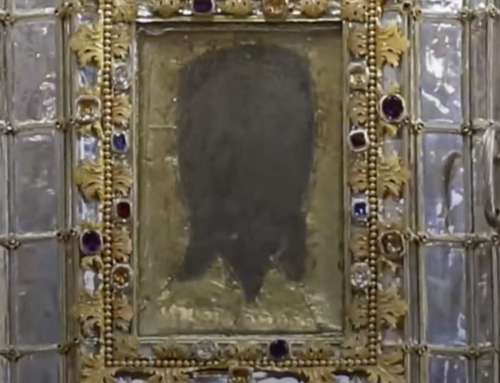
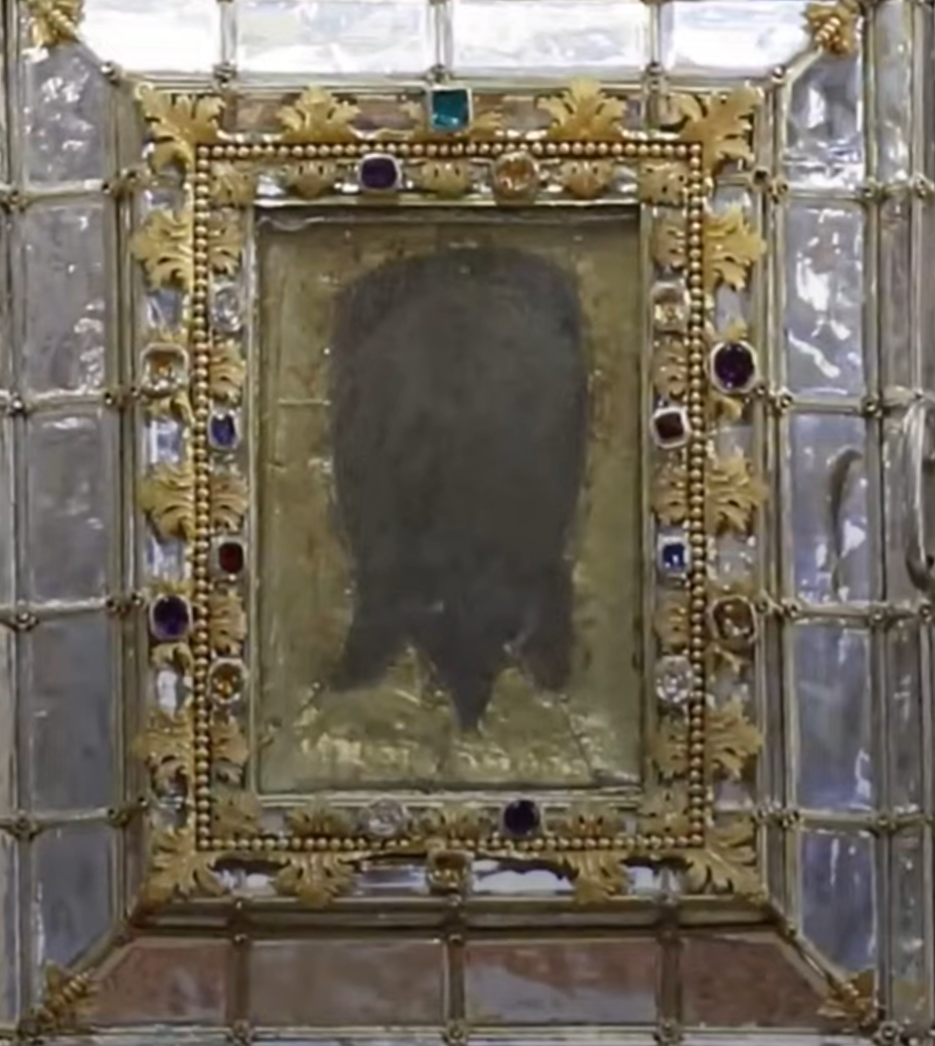
The following year, 1865, a magnificent relic-case, presented by Mr. Moisant, was placed above the tomb where it still remains. Within it, was deposited a relic consisting of a fragment of a bone of St. Martin. Thus was the glorious sepulcher properly honored; and, from that time, the people have visited it in crowds, including, among them, all the celebrated men of our day. Illustrious prelates, religious, priests of every order and from every country, have there celebrated the holy mysteries. The Prussian invasion and the siege of Paris, brought the provisional government to Tours, and the tomb of St. Martin became the center of uninterrupted prayer, where the faithful had recourse to God in their necessities.
At the close of the war, Mgr. Guibert was elevated to the See of Paris, and Mgr. Fruchaud succeeded him in the See of Tours. Carrying out the intentions of the new prelate, the commissioners of St. Martin directed one of our most skillful architects to draw a plan of the Basilica, reproducing, as nearly as possible, what the ancient Basilica must have been in the eleventh century. This plan, highly praised by connoisseurs, obtained in 1875 a gold medal at the Exposition of Fine Arts. At present, it is at the archiepiscopal palace, where, although it is only a sketch, it excites the desire and hope of all who contemplate it. Mgr. Colet, entertaining the same views as his predecessors, forwards indefatigably the preparations for reconstruction, and appears desirous of commencing operations as soon as circumstances favor the undertaking. The members of the Clothing Society are actively engaged in forwarding the work. As long as Mr. Dupont lived, the meetings were held at his house. When compelled by age and infirmities to keep his room, he aided his fellow members by his counsels, strengthening their resolution to continue the work, and animating their confidence in its success.
We wished to relate under one head the influence exercised, in various ways, by the servant of God over the project of the reconstruction of the Basilica of St. Martin, which at present so justly attracts the attention of the Catholic world. It is evident that Mr. Dupont was the first one who entertained the thought seriously and efficaciously; from his arrival at Tours until his death, he never ceased to act, to speak, to pray for this intention with the imperturbable confidence of his faith and the persevering ardor of his charity; it was in his drawing-room and in his presence, that were successively presented, discussed and prepared the different plans relating either to the discovery of the tomb and the foundations of the ancient Basilica, or to the construction of the future Basilica. If then Touraine be honored, and France regenerated by this work in the manner we hope, the happy result should be attributed to the influence and prayers of this pious layman, raised up by God to be the type of a true Christian in modern times.
We should not overlook the prevailing idea which governed Mr. Dupont’s action in this holy enterprise, — that, of reparation. With some it was a question of architecture and religious art; others considered it with a view to public utility, local interest, or national glory. Whilst the man of God did not exclude these considerations, chief and above all others, was the act of expiation. A Satanic outrage, a sacrilegious crime had been committed against the majesty of God: to repair this crime, it was necessary to rebuild what had been destroyed. Therefore, he ardently desired to see erected, not a modern church, beautiful and spacious, but a Basilica reposing upon the foundations of the ancient one, possessing, if not the same form, at least proportions analogous to its imposing grandeur. It was thus, he thought, that the present generation would expiate the crime of their fathers, would offer a just homage to our Lord, and would conquer the perpetual adversary of St. Martin on the very spot, of which he believed himself the invincible, and tranquil possessor.