Chapter 16
The Obstacles
“I am not known, I am not loved, my very commandments are despised.”
(Words of Our Lord.)
Three years had already elapsed since the time Mary of St. Peter had urged, in the Name of God, the establishment of the Work of Reparation, and had declared that the exterior symbol of the Work should be the sorrowful Face of Christ. In her ardent love, she composed the litanies, canticles and other prayers in honor of the Holy Face of Our Lord. After a long period of trial and contradiction, her superiors, more and more convinced that her communications were from God, made an effort to push forward the project, but no one dared take the initiative step. However, it was decided to make a collection of these divine communications under the title, An Abridgment of Facts relative to the Establishment of the Work of Reparation for Blasphemy. These were to be sent to some of the Carmelite monasteries and to a few pious souls. As soon as completed, they were submitted, in manuscript, for the approbation of the archbishop, who returned them to the mother prioress with the following letter: —
“Reverend Mother, I fully approve of the propositions presented to me in reference to the inspirations respecting the Work of Reparation, believing as I do, that it is not only a meritorious but a most necessary work. The project of uniting Reparation for blasphemy with that for the profanation of the holydays, is entirely satisfactory: it Has always seemed to me that the primitive object, Reparation for Blasphemy, was inadequate to meet the necessities of the times. I find the manuscript all that could be desired.”
In the same letter, the venerable prelate gave his consent for the publication of the little book entitled, Association against Blasphemy. He also granted a special authorization of the beautiful and pious litanies of the Holy Face, inspired to Sister Mary St. Peter, and permitted them to be published and distributed among the faithful. With regard to the “Abridgment of Facts,” the superiors, through motives of prudence and discretion, had but fifty copies printed and given to the public anonymously.
M. Dupont distributed several among his intimate friends. The mother prioress, on her part, forwarded some to the various houses of her order with which she had any direct communication, particularly to the Carmelites of Rouen, and those of Rue d’Enfer, at Paris. The good sister, aware of what was being done, rejoiced exceedingly, believing her desires were now about to be accomplished and her mission fulfilled; but in this the humble virgin was deceived. “I hoped,” said she, “that Our Lord had granted my desires, and that I would have nothing more to write; but he has communicated to me certain things which he wished to be made known, and consequently I submit to his good pleasure. Fiat voluntas tua.”
The communication here mentioned was important, as we shall see, for it united two beautiful and holy devotions, each equally cherished by the sister, and essentially necessary to the Work of Reparation.
Let us see how the daughter of Carmel explains this necessity:
“Our amiable and divine Savior,” said she, “permitted me to hear his lamentations over his love, unknown in the most holy Sacrament of the altar. He most happily united my heart and my mind at his feet, that I might remain with him in his abandonment, adoring his most Holy Face, concealed under the sacramental veils. Verily, it is through this august sacrament, that Jesus our Savior wishes to communicate to souls the virtue of his most Holy Face. He has again promised me to imprint his divine features on the souls of those who honor him.”
In presenting anew to the sister the mystery of his Holy Face, Our Lord enlightened her by a conception which, as she expressed it, disclosed a “beautiful horizon” on Reparation for Blasphemy, by manifesting the affinity existing between his most Holy Name and his most Holy Face. “Our Lord,” said she, “by the aid of a comparison as simple as just, permitted me to comprehend how the wicked by their blasphemy attack his adorable Face, and how the faithful glorify it by the homage of praise rendered his Name and his person.”
“The merit of an individual lies in his character, but the glory of his reputation rests on his name.”
“The Holy Name of God expresses the Divinity, and contains all the perfections of the Creator; it follows, therefore, that the blasphemers of this Sacred Name insult God directly. Let us recall the words of Jesus: “I am in my Father and my Father in me.” (St. John.) Jesus became man by the Incarnation; it is he who has suffered in his adorable Face all the outrages committed by the blasphemers of the Name of his Father. Our Lord has manifested to me, that there is something mysterious on the face of an honorable man, who has suffered contumely; his name and his face are particularly allied. Observe a man distinguished by his name and by his merits, in the presence of his enemies; these raise not the hand against him, but overwhelm him with injurious epithets, instead of the honorable titles which are his due, scoffing at him and mocking him.”
“Again, notice the expression of his face, would you not suppose that all the derisive language of his enemies was imprinted thereon, causing him to suffer a martyrdom? Behold that countenance covered with shame and confusion; he could support the most cruel pains, the most excruciating tortures without flinching; but the loss of his reputation, of his good name,— this is unsupportable, he can no longer control his emotions, which are soon depicted on his countenance. Such is a feeble portrait of the Divine Face of Our Lord, contemned by blasphemers.”
“Now let us represent to ourselves this man once more, but in the presence of his friends, who being apprised of the insults he has received, eagerly present themselves to sympathize with him, offering the respect due to the greatness of his name. Shall we not then read in his countenance the consolation which these sympathies afford him? His brow again bespeaks peace, and his features become radiant with joy; happiness beams, from his eyes, and the smile of gladness is on his lips; loving friends have soothed that face outraged by enemies; opprobrium is forgotten, peace and happiness reign supreme. “We can see in this feeble image, that which the friends of Jesus perform in the Work of Reparation. The glory which they render his Name encircles his august brow, and is portrayed on his most Holy Face in the adorable Sacrament of the altar. Reverend mother, this comparison which Our Lord has given me, has greatly enlightened me. I now see clearly that blasphemers insult the Face of Our Lord, and that reparators rejoice and glorify it. I have never before had occasion to make this remark, that the face of man is the seat on which is enthroned either glory or ignominy. Therefore, I shall apply myself anew to honor the Name and the most Holy Face of Jesus, who has so touchingly invited me to render him this service.”
Notwithstanding the importance attached to these new favors by her superiors, the sister was still kept in her arduous office of portress. In the month of February, 1847, a few days, after the encouragements given by the archbishop, she felt extremely fatigued. Perceiving that her strength was failing, she, with entire simplicity, asked for a sister to aid her in her office. The mother prioress told her that she could not spare any one at the moment, and added that perhaps a little indolence and self-love had prompted her to ask for assistance; she directed her to pray for the restoration of her health, so that after two weeks she might be able to assist at all the regular exercises of the community.
Let us lend an attentive ear while she is relating to her superioress, what she experienced after this mortifying refusal: “I received your order, reverend mother, with respect, yet I confess that in my weakness, I was much pained, because I did not find in you, reverend mother, your ordinary tenderness; and the devil commenced to tempt me to murmur.”
“Happily, I ran to expose my sorrow to Our Lord and while shedding many tears, I told him that this office of portress was a continual martyrdom, because it kept me away from him. Having explained to my good Master, all that was a cause of pain in this employment, I added: ‘However, my dear Lord, I only desire that which will render thee the most glory, and save the greater number of souls. Thou didst not descend from the cross, neither shall I, from mine!’ And I then and there begged for my recovery in virtue of holy obedience.”
“The next day, at holy communion, my Divine Lord said: ‘My daughter, is not solitude your delight? During the first years of your religious life, when you were without any office, were you not supremely happy?’ ‘Oh! yes, my Lord,’ I replied. ‘Know then, my child, that a religious should be a living crucifix. If you had not these sufferings, how would you be able to serve the souls I have placed under your care? As a proof that I desire you to remain in this office, and also that you may know it is I myself, through the mouth of your superior, who have refused you assistance, I command that you be instantly restored to health. Be consoled, my child, I will give you immortal souls as the reward of your labors.’”
The Lord had not finished speaking, when all at once the loud ringing of the parlor bell called the virtuous portress to duty. This was the signal for sacrifice. “Ah! my Jesus,” said she, “the bell calls me, I shall return to my post once more in the name of obedience.”
In fact, the favor asked had been obtained; her health was perfectly restored and she was able to keep her rule to the letter. In another communication, Our Lord said to her: “I wish you to honor my servitude, for I did not come on earth to be served, but to serve.” Then he added: “In a time of famine, when bread is very dear, would not a father deserve the reproaches of his family, if instead of supporting them, he neglected to labor and was thus the cause of their sufferings? Well, then my child, this is your own portrait. — You have children to support; I have told you that you must earn bread for them; they need every morsel you can give them; do not expose yourself to the risk of being accused, on the day of judgment, of having neglected them.”
On another occasion, he gave her this instruction on the duties of her office: “My daughter, you complain that you cannot lead a solitary life, because of your occupations; but do you not know, it is the soul that must be in solitude? The soul that controls her passions, by the continual immolation of self-will to the virtue of obedience, is truly a soul in solitude, for she participates in some manner, in the solitude of God by a life of conformity to his holy will. On the contrary, a soul, although in the silence of retirement, is not in solitude when the tumult of her passions agitates and troubles her, and when she delights in her own will; remember, my child, that the nourishment of all the passions is self-will.” “These are the instructions which Our Lord has had the goodness to give me. Henceforth, I desire to have no other will than his; I will be portress all my life, if it be pleasing to God and to my superiors.” And in fact, she was portress until her last illness.
These children given her to nourish, were the sinners whose salvation was confided to her. The Divine Master invited her frequently to this work of charity. “During the past two weeks,” said she, (March 2nd,) “Our Lord has kept me in retreat. He has not communicated with my soul in any extraordinary manner; I have been solely occupied in renovating my inmost heart, and in humbling myself at the sight of my many infidelities. Having made yesterday the confession of all my faults, I approached holy communion this morning with the firm resolution of being more faithful to God. Like the prodigal, I humbled myself, repeating, ‘I have sinned.’ Then, as I was about to annihilate myself in the presence of the majesty of God, considering him surrounded with glory, he pronounced these words: ‘Ah! my child! rather consider me covered with the wounds inflicted by sinners.’ At that instant it seemed to me that I beheld him in a most sorrowful state, and he said: ‘My daughter, approach and lend thine ear.’ My Divine Savior then permitted me to hear these heartrending lamentations: ‘I am not known, I am not loved; my very commandments are despised.’ And he added the following words which made me tremble: ‘Sinners, as clouds of dust borne on the wind, are whirled from this world and precipitated into hell. Have pity on your brethren and pray for them. Staunch the blood flowing from my wounds by the ardor of your love, and fear not. When you elevate your heart to me by aspirations, I receive it in my hands, and I shall guard it safely.’ After this, I understood that he was pleased with my little retreat and he added:— ’If you have discovered in yourself so many defects, after having meditated on holy subjects, consider the unfortunate multitude who never reflect on the great truths of religion! Therefore, my child, it is your duty to Labor for them even as a mother who cannot take nourishment unless her children partake likewise.’”
This letter is concluded in these terms:— “This is what Our Lord has communicated to me. Oh! what sorrow I experience when I think of the eternal loss of so many souls! How ardently I desire to become a fervent Carmelite, to ransom numbers for God! Assist me I beg of you, reverend mother; spare neither my pride nor my self-will. It were full time that I should entirely immolate my perverse nature to clothe it with our Lord Jesus Christ.”
Thus it was that the Divine Master drew the attention of his servant to the one great object, the universal Reparation operated by his coming in this world, and by his death on the cross, that is, the salvation of souls. “He sent me to labor, now in one field, then in another, according to his own good pleasure. For fifteen days he has placed me in the retirement of retreat, forbidding me to withdraw until he would call me. During this time he showed me the amount of tare in my own soul, and I sincerely confessed my faults.” Our Lord was preparing her daily for the special work, the establishment of which had been previously announced to her. The project appeared to be dormant; there was no question of it, even at Tours, after the distribution of the notices of which we have spoken. But at the beginning of March in 1847:— “Behold!” exclaimed the sister, “the voice of the Lord has resounded in my ear, calling me and giving me anew the mission of the Work of Reparation for Blasphemy. This is the third time be has called me to this work.”
“He assured me a short time ago, that it would be established, which has given me so much confidence, that if I saw the World and hell united to crush it, I would still hope in Him whose arm is all-powerful. From the outset, Jesus declared to me that he would permit the devil to counteract his designs, in order that the confidence of his servants might be proven. To-day, he said: ‘Rejoice, my daughter, the hour approaches, for the birth of the most beautiful work that has yet appeared on the face of the earth. Offer my divine Heart to my Father that you may obtain it the sooner.’”
Our Lord here means the work in reparation for blasphemy, to be offered through the merits of his dolorous Face. The redemption purchased for mankind by Jesus Christ on the Cross, is by excellence, the noblest and the most sublime manifestation of the wisdom and of the love of God. The mind of man can conceive nothing more astonishing than this act of the Word becoming incarnate in a Virgin’s womb, and dying the ignominious death of the cross, for the salvation of sinners. Assuredly, then, this is the ‘noblest work’ that has ever been accomplished on earth, and is continually renewed in the Church over every part of the globe from the morning watch even unto night. But since the consummation of this great sacrifice of the cross, generations have succeeded each other, new peoples have arisen; in our time, the spirit of evil, armed with pride and sensuality, has inflicted on society two wounds of such magnitude as have hitherto been unknown; deep-rooted impiety and absolute incredulity, these are the two loathsome wounds of modern society, which corrode all that is most sacred.
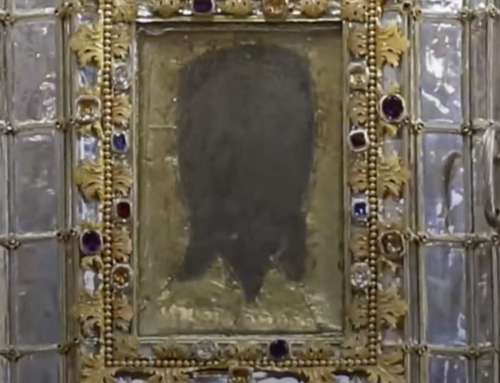
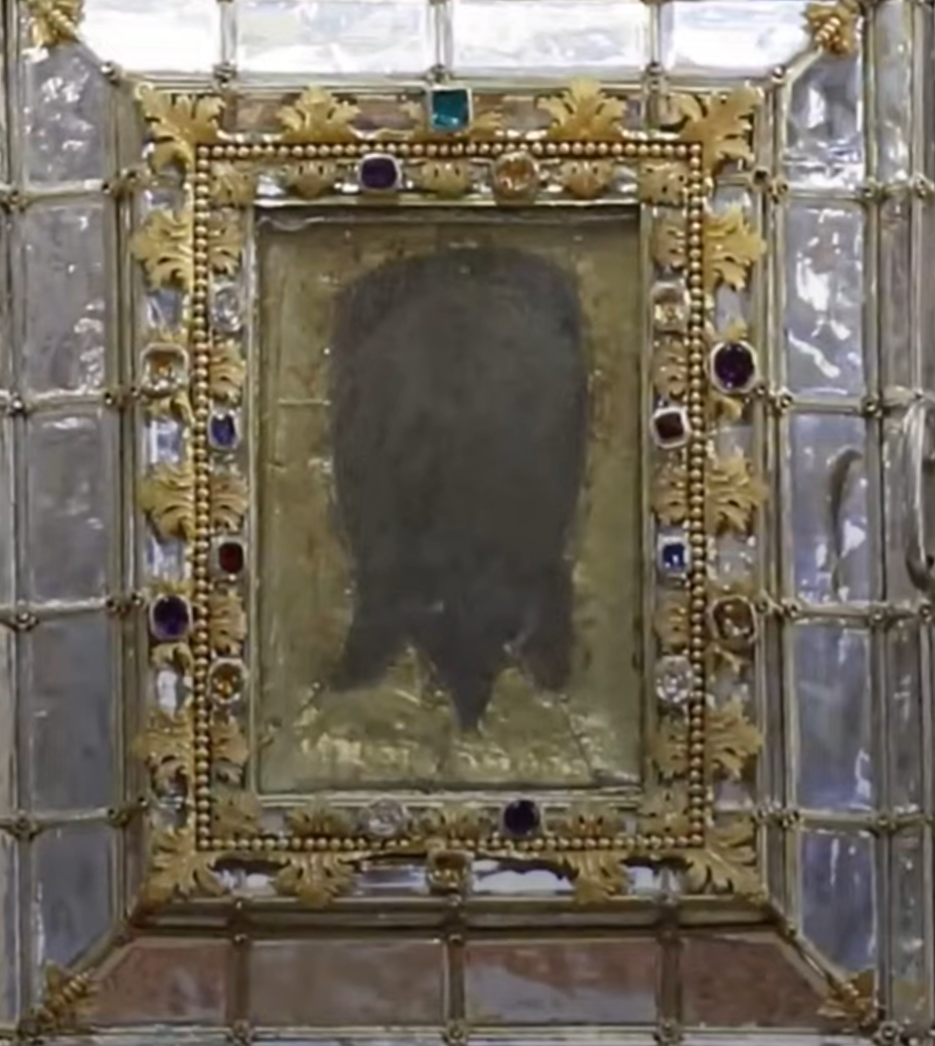
To combat this strange and satanical scourge and to expiate the abominations which result, the Word Incarnate, our only Mediator, and the Sovereign Reparator of degenerate society, offers us his Holy Face, this portion of his sacred humanity in which are reflected, both the thoughts of his mind and the affections of his Heart, and which give him an appearance like unto other men; and in which he has suffered the greater part of the ignominies of his Passion. He demands, therefore, a new work whose object is to repair these crimes of modern society. The Reparation is intimately allied to the great Work of the Redemption, and is in reality the most noble and the most necessary work for our times.
As the sister was continually worrying over the many obstacles, Our Lord said to her: “You are now beholding the morning twilight of a beautiful day and he engaged her to abandon herself anew into his hands, to suffer both interiorly and exteriorly all the trials that he would be pleased to send her.”
“He made me understand,” said she, “that I was in his hands, as a feeble instrument which he used at pleasure. This is very true, for I cannot labor at this work but by a special grace, when he pleases and as he pleases. I feel convinced that I have received this grace in my soul, therefore, with the assistance of the Lord who directs me, I will do nothing from my own inclination. Sit Nomen Domini benedictum!”
However, the “Abridgment of Facts,’ which had been sent to some of the Carmelite monasteries, and to some intimate friends in the city of Tours, had produced their fruit;— an ardent desire of seeing the Reparation established. It was the little grain of mustard seed sown in good ground, which increased and produced fruit a hundred fold. Yet, notwithstanding all the precautions which had been taken in the distribution of these prayers of reparation, the subject was soon noised abroad and came to the ears of Monseigneur from various sources; he became alarmed in consequence of the political aspect of affairs, and wrote a hasty letter to the mother prioress, telling her they had gone too far, and had exceeded his intentions. In a word, he unloosed absolute silence both on the Carmelites and on M. Dupont on the subject of Reparation. All submitted immediately, the command of the archbishop being received as if it were from God himself, and the distribution of the Notices was discontinued. But the first impulse in the right direction had been given in conformity to the will of God. Two great Works of Reparation would soon spring forth into life; of these we shall soon have occasion to speak: the work of Langres and that of Mlle. Dubouché. Despite this uproar, the “Instrument of God” remained in obscurity, as her name had not been revealed, save to M. Dupont and a very few intimate friends. Within the monastery itself, the secret was inviolably guarded. The religious, secretary to the mother prioress, was the only person who had any cognizance of what was going on. This sister was Mary Teresa of St. Joseph who succeeded Mother Mary of the Incarnation as prioress. She was an intimate friend of Mary St. Peter; both having entered the cloister about the same time and made a part of their novitiate together. The extraordinary graces bestowed on the latter could not long escape the discerning eye of this friend, ever at her side. When Sr. Mary Teresa was told of all that was transpiring, she was filled with astonishment; her esteem for her companion was boundless, and she rendered her many services which were acknowledged by an affectionate gratitude. In the designs of Divine Providence, it was this very sister who was to withdraw from their obscurity the manuscript containing the celestial communications of her old companion, the precious treasure which had been sealed from observation for thirty years.
The injunctions of the archbishop put a stop to any further action in the matter, on the part of the Carmelites. Nevertheless, in the interior of the monastery, the humble confident of Jesus continued to be the recipient of new favors. Rendering account of the sadness she experienced, the servant of God writes, March 14th: “To-day, after holy communion, our Lord Jesus revealed to me that the evils which had been inflicted on us, were only the forebodings of what his justice was preparing, if we appeased not his anger. And he showed me the sins of blasphemy, and the profanation of the Lord’s Day under the form of two engines by which the guilty drew down upon themselves the waters of his vengeance, exposing themselves to be submerged if this Work of Reparation given in his mercy as a means of salvation, were not established. Afterward he said that the sectarians called Communists had only made an attempt to blindfold us. ‘Oh! said he, ‘if you knew their secret and diabolical machinations! If you could comprehend their antichristian principles! They are only waiting a favorable moment to set France in flames, therefore be earnest in your supplications for the Work of Reparation. Ask him who possesses authority to establish it, that mercy may be obtained.’ ‘But my Divine Master,’ I replied: ‘my superiors have already requested its establishment.’ ‘That is not sufficient,’ replied Our Lord, ‘you are the instrument whom I have chosen to accomplish this work, and you must demand it in my Name.’”
The pious Carmelite, having thus been twice ordered by the Lord to write to the archbishop, consulted the mother prioress to know if she should comply; the latter dissuaded her under the pretext that she ought not importune Monseigneur in the midst of his many occupations. “After holy communion this morning,” said the sister, (March 19th), “I informed my Lord Jesus of the counsel I had received, not to write to the archbishop. My Divine Master answered me very nearly as follows: ‘My daughter, the virtue of obedience is very dear to me. Be submissive, that all may recognize the spirit which guides you. I desire, however, that these communications which I give you, be transmitted to your first superior.’ I replied as follows:
“My Divine Master, permit me to ask you, with the simplicity of a child, what you desire me to say to Monseigneur when I ask for the establishment of the Work of Reparation, for you know he has already labored for it?’ He answered: ‘If this work is not built on a solid foundation, it can never be permanent; if it has not a special approval, it will only languish, and finally perish. But if approved of by a Brief, the Reparation will soon establish itself in all the cities of France; and it is proper that he who has been the first to put his hand to the work should complete it.’”
“As I seemed to fear being deceived if I demanded this work in his Name, he made me observe that I had not espoused the cause of reparation until he had inspired me, and that I should remain perfectly tranquil. He then informed me that he would explain his action in my regard by the example of a bow and arrow saying, it was a just image of my soul; that he aimed his bow and arrow in whatever direction he wished, for the accomplishment of his designs. He added: ‘When I created you I proposed that it should be through your instrumentality that the Work of Reparation be given to mankind. Therefore, be consoled; when this work shall be accomplished, I will leave you no longer on earth, and my mercy will compensate you for all your labor.’”
The admirable and courageous soul exclaims during an interview with the mother prioress: “Permit me, reverend mother, to beg the assistance of your prayers, for I stand so much in need of them; I bring forth this work by prayers and sufferings. When Our Lord charged me anew with the Work, he said:
Pray unceasingly for its establishment, and offer yourself entirely to me, ready to suffer in body and soul, all that I shall think necessary for the accomplishment of my designs.
“From that moment, I have been on the cross, but I dare not complain, I who have so many times asserted that I would give even the last drop of my blood for the accomplishment of his designs in this Work of Reparation! Oh! how unworthy I am to suffer for so noble a cause,— the glory of God and the salvation of souls! I confess to you, reverend mother, that I have often had the weakness to weep and lament, but I implored Our Lord to pay no attention to my poor nature.”